

- Agency Report
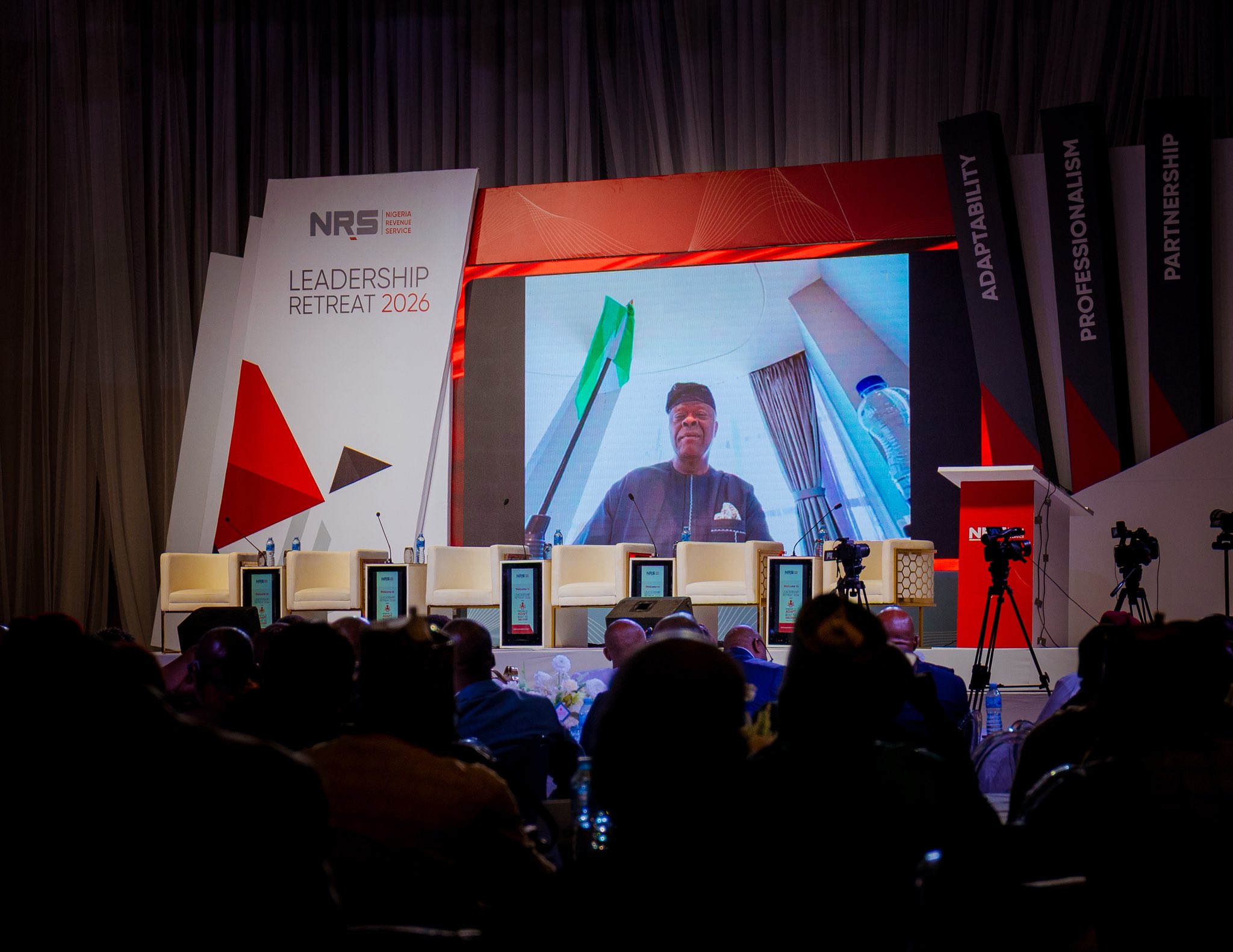
The Minister of Finance and Coordinating Minister of the Economy, Mr Wale Edun, has urged Nigerians to rely more on what the country produce to check revenue wastages.
Edun made the call on Tuesday in Abuja at the first leadership retreat of the Nigeria Revenue Service (NRS).
According to him, it is time for us to rely much more on what we have in Nigeria. It is time for us to buy from ourselves.
“We talk about buying from West Africa or trading with Africa as a whole, but intra-Nigerian trade is critical.
“We all know what spending in Nigeria does for the economy, we know what it does for the revenue targets of NRS.”
He disclosed that the debt service that was paid by the developing countries in 2024 was 163 billion dollars, while the overseas development assistance that came in was 42 billion dollars.
“The foreign direct investment and the private sector funding that came in from abroad to developing countries were just 97 billion dollars.
“So, you can see that as developing countries, the flow of funding, we are giving out is more than we are getting through these various categories.
“Clearly, it is what we do for ourselves internally that is going to be important at this time,” he said.
The minister also said that it had become more evident that the government needed to deliver in the area of fiscal reform and revenue mobilisation.
“This is where you, as the NRS, play not just the pivotal but an indispensable role,” he said.
The Executive Chairman, NRS, Dr Zacch Adedeji, said that the service represented a departure from the past; a new era, adding that new eras demand new postures.
Adedeji said that the transition could only be secured by the capacity to adapt, to stretch, and to lead at a level of excellence that Nigeria now required of its citizens.
He urged members of the NRS family to be mindful of “internal blockers ‘” who could take steps to undermine efforts by dedicated staff members to succeed.
” Every one of us in this room has a plan for NRS. We have strategies, reform agenda, roadmaps, and transformation framework.
“But history teaches us that even the most sophisticated plans can be undermined by internal blockers.
“They rarely acknowledge the unspoken assumptions that influence how we lead, how we delegate, how we respond under pressure, and how much space we create for others to think, acts, and innovate.
“In institutions like ours, these blockers do not acknowledge themselves boldly. They rarely appear as a resistance to change. Instead, they show up subtly, often disguised as good intentions,” Adedeji said.
He added that the first step of the leadership retreat was leadership, and self- examination.
“If we cannot confront our internal barriers, we cannot credibly lead thousands of people who are now in our institution.
“I want to be very clear; this reflection is not something I am asking of you from a distance. It is something I have had to confront myself.
“One of my long-standing assumptions has been the belief that if I can do something in a particular way, then others should be able to do it in the same way.
“On the surface, it appears harmless, even noble. In reality, it distorted how I set expectations, how I reviewed performance, and how I delegated authority,” he said.
He noted that leadership was not the replication of oneself, but the elevation of others.
“I share this, not as a personal story, but as a collective warning and invitation. If a leader’s unexamined belief can slow down a system, then together, our belief can either unlock or constrain the future of this organisation,” he said.
Also speaking, the Chief of Staff to the NRS boss, Mr Tayo Koleoso, said that the tax reforms were the first time in a long time that the country came together to create a reform that would propel it to achieve a trillion-dollar economy.
Koleoso urged the NRS staff members to be determined to serve, adding that the service carried a huge responsibility for the country.
According to him, the main objective for this NRS retreat is to set a clear strategic direction for 2026 and beyond. To align our understanding of NRS, the strategic vision, priorities, our mission statement, our new set of responsibilities.
“We need to understand our objective in these two days; alignment with our revenue ambition. So there’s a lot about our mission.
“Yesterday is different from today. We were tax administrators before. Now we are saddled with the responsibility of the revenue of the entire country.”
The News Agency of Nigeria (NAN) reports that the NRS has set a revenue target of N40.7 trillion for the 2026 fiscal year. NAN