

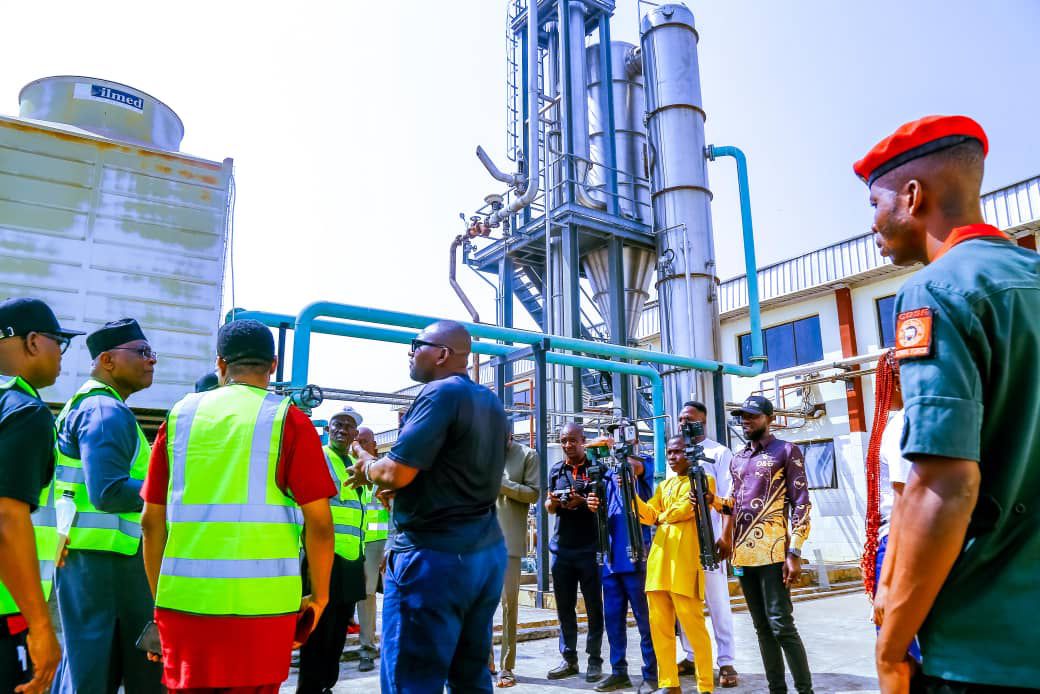
The Chief Medical Director of the Benue State University Teaching Hospital Dr. Stephen Terungwa Hwande told the group of media chiefs a story at the entrance of the Radiology Department of the institution on Friday January 23, 2026.
He said that years ago, a man had brought his brother who was sick to the Teaching Hospital. In what turned out to be a poorly equipped tertiary health institution, the man’s brother died right in front of him as the officials lacked all they needed for immediate cares. That man, standing there freshly bereaved, vowed that should he have any opportunity to become the governor of Benue state, he would do everything possible to make the teaching hospital a world class health care centre. That man was now Rev Father Hyacinth Alia, the governor of the state.
The above is one of the reasons the hospital flaunts one of the most modern health care delivery technologies in Nigeria.
The Chief Medical Director made no mistake emphasising that the hospital’s Magnetic Resonance Imaging (MRI) machine is one of the two most modern in the whole of Nigeria.
The health sector is one of the areas where Alia is indirectly telling the people of the state that he, and no one else, should be allowed to continue the works of transforming the Food Basket of the Nation, as Benue state is known.
Those who visited the capital of Benue State, Makurdi possibly last about a decade ago or more are more predictably going to enter into the state capital really unable to navigate their ways.
For decades, Benue’s vast arable land and strong farming culture have sustained millions across Nigeria. Yet, agriculture alone has not been sufficient to shield the state and nation at large from economic shocks, youth unemployment, or revenue volatility.
Recognising this reality, the Alia administration has initiated a deliberate and fundamental shift: moving Benue’s economy to a broader industrial and fiscal foundation while still preserving its core agricultural strength.
On assumption of office on May 29, 2023, Alia said he inherited severe socio-economic difficulties with a recorded nearly 28,997 conflict-related deaths as a result of prolonged period of heightened insecurity.
In the same vein, the state’s official unemployment rate stood at about 12 per cent, according to data from the state budget commission.
Confronted with these realities, Governor Alia’s administration has pursued a programme of structural reforms to stabilise the state’s economy and expand its productive base.
Central to this agenda is the creation of the Food Basket Brewery (FBB), BenFruits, a bakery, the state-owned printing industry, and a garment factory, which largely utilise its local raw agricultural materials and evolve into a centre for agro-processing and manufacturing.
The Brewery Factory
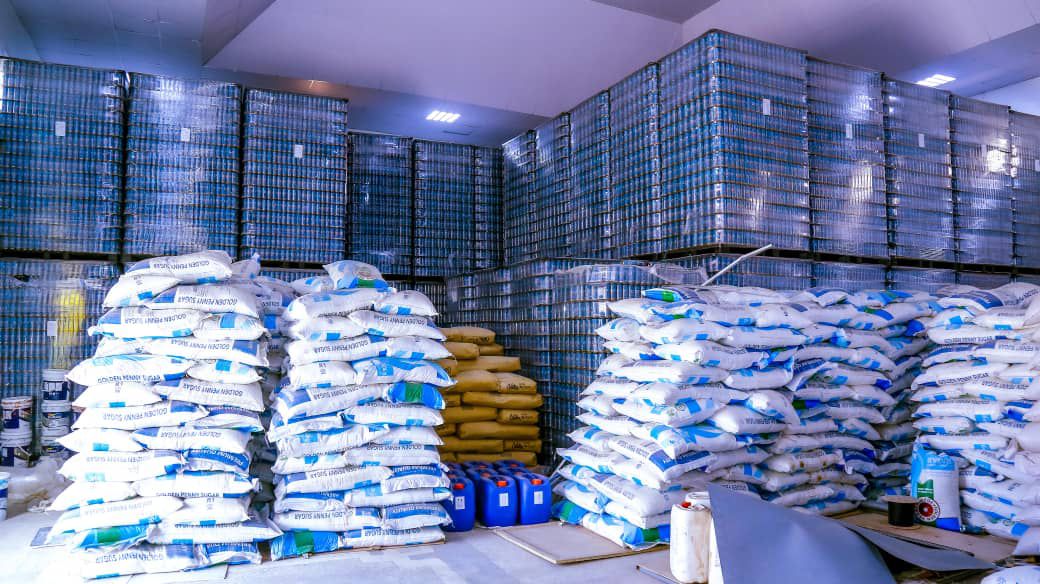
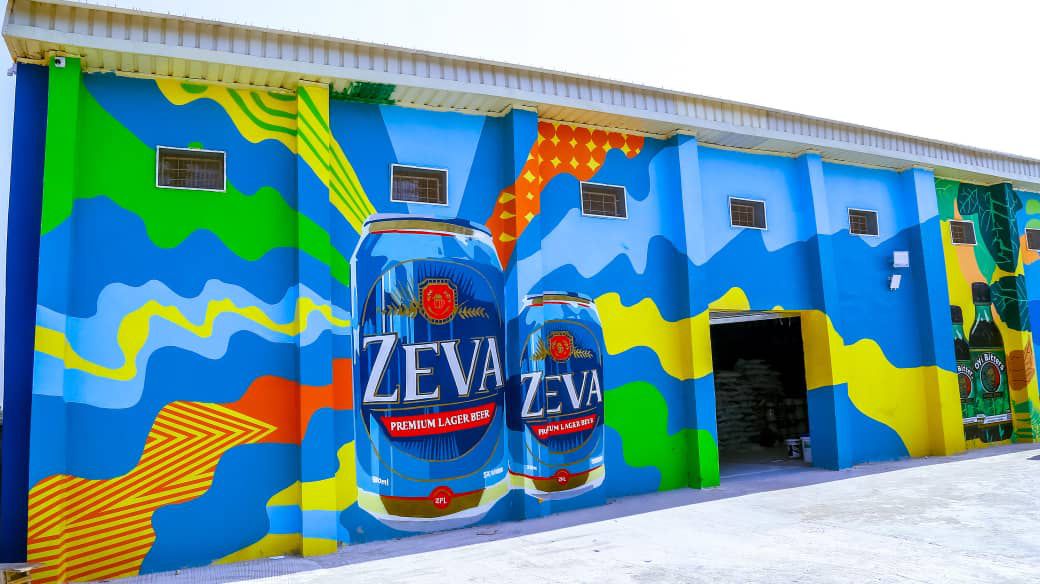
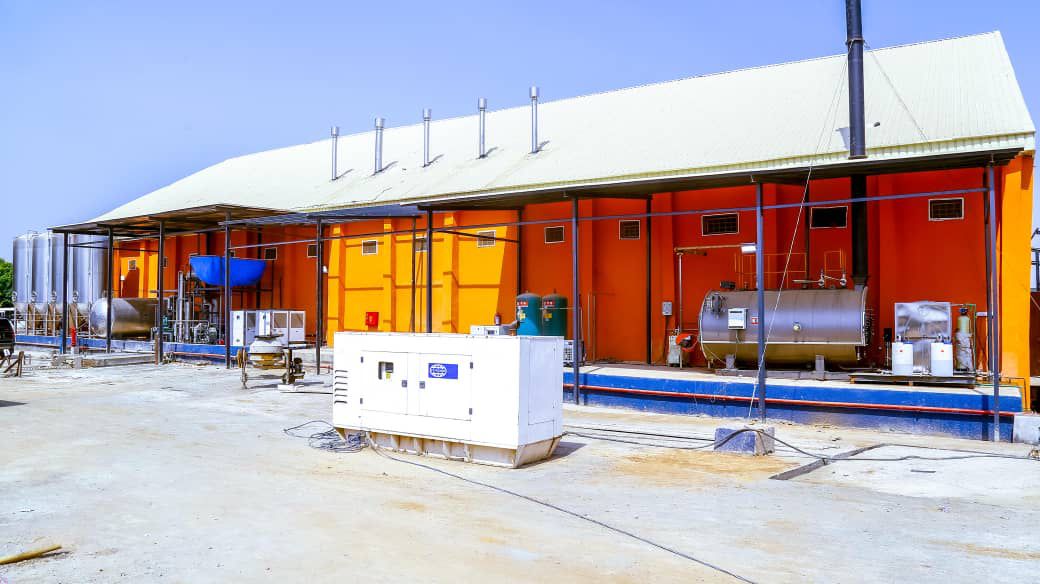
Established in 2025, the FBB is a state-owned industrial project under the Benue Investment and Property Company Limited (BIPC). The ₦15 billion brewery, located in Makurdi, the Benue State capital, occupies about 1.2 hectares along the Makurdi–Gboko Road and produces beers and other beverages, including Zeva and Oyi Bitters.
Upon full operation in November last year, the brewery is projected to generate up to 1,500 direct and indirect jobs, contributing significantly to industrial growth and employment in the state. The Chinese machine manufacturers supervise and maintain the factory equipment, employing and training about 40 local Benue youths in the maintenance department.
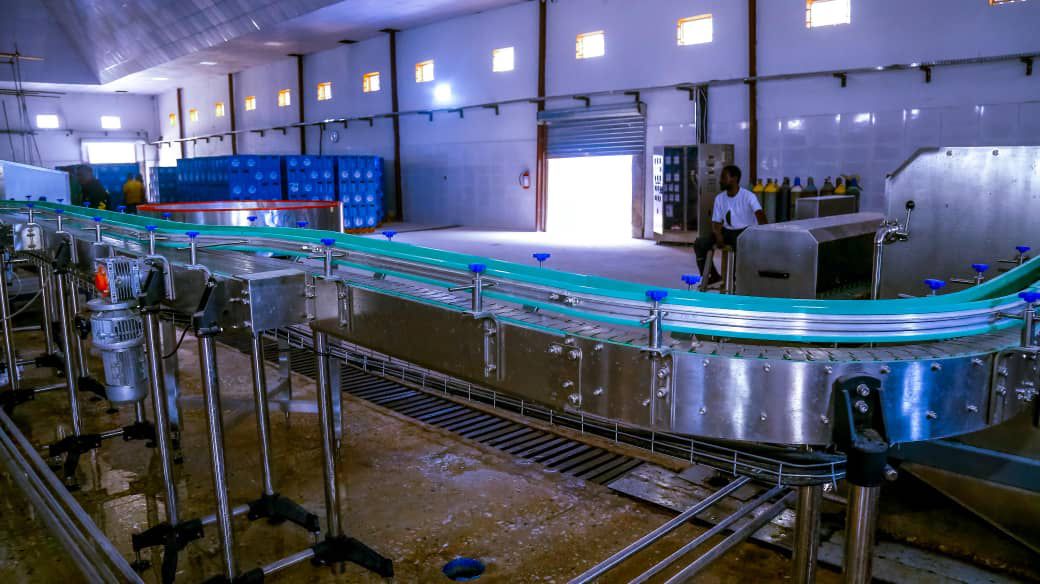
The Brewery capacity is structured around shifts. For instance, the brewery produces 1,000 bottles per hour. For example, the FBB can reach 8,000 bottles in an eight-hour shift. With day and night shifts, production can double to 16,000 bottles in 24 hours, state officials have analysed.
During a project inspection tour last week, Henry Boager, a maintenance officer with BIPC, who spoke with top Nigerian editors from the Nigerian Guild of Editors (NGE), led by Bayo Onanuga, Special Adviser on Information and Strategy to President Bola Tinubu, said the Benue State government intends to improve the salary and welfare package for the staff of Nigeria Brewery, bringing it in line with an improved standard and structure.
“We’re intending to improve on our structure to make ours more suitable to make our brewery workers more comfortable,
“For instance, the Benue state government will provide a two-shift working system: morning and evening and transportation means; they have a bus that conveys staff to work. And then they still provide lunch for the workers,” he added.
Speaking on how the factory sources its raw materials, the BIPC official revealed that while the state government sources its materials for beer production outside, such as Malt and Sorghum, the governor has since encouraged farmers in the state to cultivate those raw materials to ensure sustainability.
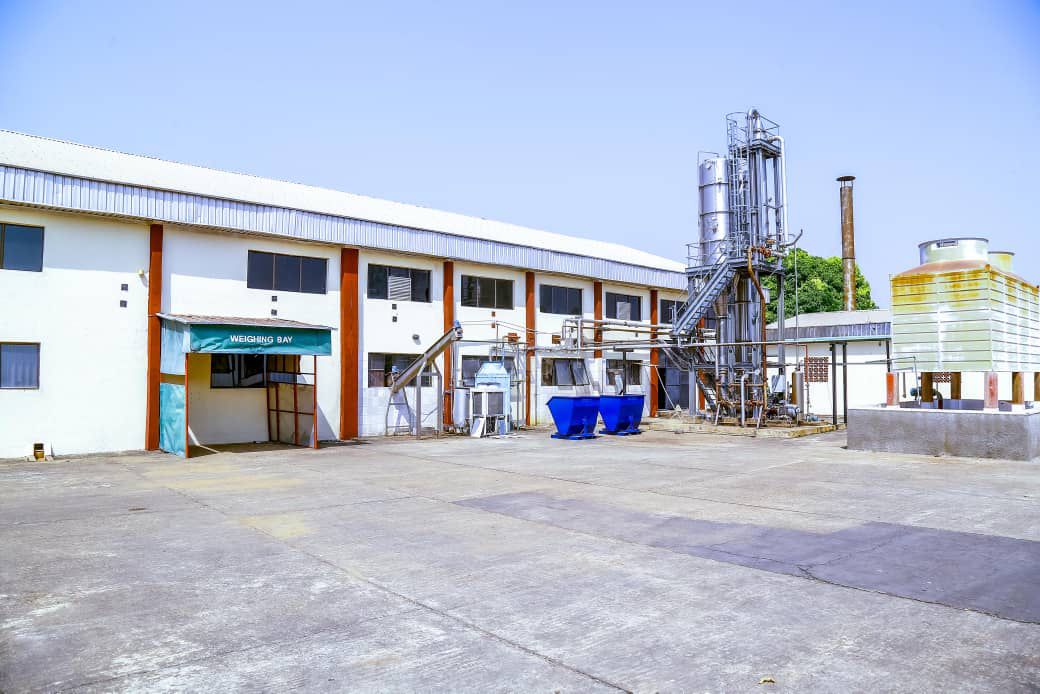
He said, ‘’The raw materials, they actually grow within certain temperatures that are not favourable in Benue. And we are working on a system to produce and preserve it at a suitable temperature for its production.
According to reports, the BIPC took delivery of 166 chiller fridges for distribution to retailers of Zeva premium beer, Oyi Bitters
The group managing director of BIPC, Dr Raymond Asemakaha, who took delivery of the consignment, said it marked another milestone in the company’s efforts to reduce supply gaps in its production chain.
Benfruit Plant
Unlike the beer factory, which temporarily sources its raw material outside the state, the juice plant secures its material, like Mango, Oranges, and Pineapple, directly from local Benue farmers to produce its various juice products.
The factory, which is still undergoing full-scale installation of high-capacity machines, is expected to begin full operations on February 28. It is designed to process local oranges and mangoes, boasting a capacity of 4 metric tonnes per hour. “We know that raw material is never a problem because we have it here locally,” Boager said at a visit to the factory located at the Industrial layout in Markudi.
Speaking on the estimate of how many tons of oranges the state government would be buying directly from local Benue farmers, Boager explained that the state’s orange processing plant can handle 8 tons of oranges per hour, producing 60,000 litres of juice, enough to fill about 80,000 cartons in an eight-hour day.
He said, ‘’I know, the orange, for instance, we have 8 tons per hour processing unit, right? So, if we can do 8 tons per hour and 1 trailer, it takes 32 tons. ‘So, if you divide 32 tons by eight, you see how many trailers we can do in a day. So that is a pure calculation.
Benue State, known as Nigeria’s largest producer of oranges, contributes a significant share of the country’s nearly 930,000 tons of orange output each year, with total citrus production in the state estimated at over 1 million metric tonnes annually.
While the plant produces juice, with plans for oil extraction and the production of organic fertiliser from waste, Boager also revealed that the oil extracted from the fruit is primarily for export.
He added that while the country produces fruit concentrate, only large beverage companies such as Chifoods and Coca-Cola can afford to purchase it, using it to create their own drinks according to proprietary recipes.
The mission of the company is to put fruits juice produced here
Benue State-Owned Printing Press, Fashion and ICT Hub
The Benue State Printing and Publishing Corporation, originally established on March 3, 1977, has been successfully revitalisedunder Governor Alia’s administration after decades of inactivity.Located in Makurdi, the corporation is now a fully functional state-owned enterprise.
Led by Managing Director Mr Joel Terhemen Mtsor, the company provides high-quality commercial, digital, and offset printing services to both government and private clients. The enterprise has increased employment and also offers bookbinding and graphic design. Notably, the corporation operates with a capacity of over 22 high-powered industrial printing machines and employs approximately 50 permanent and ad-hoc staff members.
Since its revitalisation, the state has been strengthened in its capacity to print confidential documents, such as Certificates of Occupancy (CofO) for local government land use and examination papers, which used to be taken to neighbouring states like Plateau.
Mtsor said,‘’ We run from Monday to Sunday. And our staff work on shifts to aid the efficient performance of our workers. On the kinds of machines that we have, we have a Deep Buzz machine. Those are the banner machines. No printing machine does everything. The machines that are used for banners. Are not the same as the machines that are used for. Production of t-shirts. They are not the same machines that are used for. For brushing. For high-volume paper printing
‘’It’s not just the printing press that handles paperwork, no. We are doing t-shirts here. We do face caps here. We do banners, and we do brochures. We do high-volume printing, like you know, calendars too.
‘’There is no state-owned printing company in the whole of North Central, aside from the one in Benue, and no private printing press in Benue has this kind of capacity,’’ he added.
The state government has also put in measures to strengthen its drive for industrial growth and job creation with the commissioning of the ultra-modern Benue Fashion and ICT Hub in Makurdi on August 27, 2024.
The facility was inaugurated on behalf of Vice President Kashim Shettima by Senator Ibrahim Hassan Hadejia, Deputy Chief of Staff to the President.
The state-owned hub is equipped with over 200 modern fashion machines for the production of military, school, and corporate uniforms, alongside an ICT section with more than 100 devices dedicated to youth training in digital skills. The project is expected to generate about 48,000 jobs annually.
As a state with no visible industrial hubs over the decades, Alia’s approach to industrialisation through small scale industries such as the fashion and garment factory, the juice factory and the brewery appears strong enough to set the pace for a new industrialisation that is capable of giving the state a more assured future.