


- Safiu Kehinde
From Akpabio/ Natasha sexual harassment scandal to Wike/Fubara leadership saga and alleged Christian genocidal brouhaha, the year 2025 has been a filled with jumbo pack of political events in Nigeria.
The country’s political drama started much earlier in 2025 with Senate President, Godswill Akpabio, and Kogi lawmaker, Sen. Natasha Akpoti-Uduaghan, giving Nigerian a curtain raiser with their sexual harassment scandal.
As the year comes to an end, NPO Reports compiled major political events that shaped 2025.
Akpabio vs Natasha
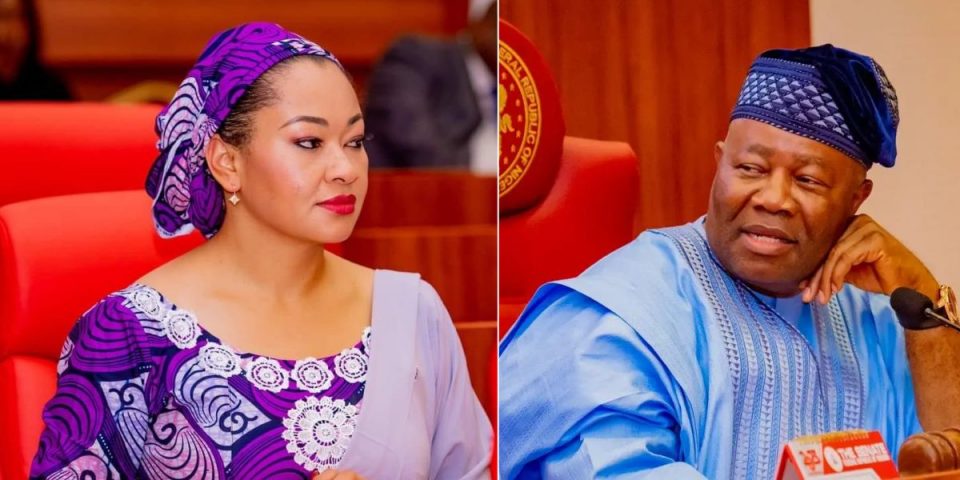
The Genesis of the face-off between the two lawmakers dates back to Thursday 20th of February when a video of the Senate’s plenary session surfaced online.
Drama had reportedly ensued at the plenary session with Akpoti-Uduaghan captured yelling at Akpabio, over sitting rearrangement.
Akpoti-Uduaghan blew hot upon resumption of the session after discovering that her seat was relocated.
The visibly enraged lawmaker could be seen calling out the Senate leadership after refusing to comply with the change of her seat.
She accused the Senate leadership of gender discrimination.
The few minutes clash at the red chamber would swiftly escalate into months of litigation battle seasoned with allegations and controversies after Akpoti-Uduaghan’s appearance on Arise TV’s Good Morning Show where she accused Akpabio of sexually harassing her.
She alleged that her troubles with the Senate President started since her refusal to accept his sexual advances.
Akpoti-Uduaghan recounted how Akpabio had made advances to her during one of her visit to his Akwa-Ibom residence in company of her husband, Uduaghan.
The allegation had sparked mixed reactions with several public figures and institutions demanding for probe into the allegation.
Some netizens also called on Akpabio to voluntarily step down as the Senate President pending the outcome of the investigation.
As against the public expectation, Akpoti-Uduaghan’s shocking revelation would be met with the Senate’s suspension of the Kogi lawmaker.
On the 6th of March, members of the Senate approved the six-month suspension of Akpoti-Uduaghan as recommended by the Committee on Ethics, Privileges, and Public Petitions.
The Kogi lawmaker was referred to the committee led by Sen. Neda Imasuen for disciplinary action over her seat arrangement outburst with Akpabio while the lawmakers kept mum on the sexual harassment allegation against the Senate President.
Coupled with her suspension, the committee had in its report also recommended the withdrawal of the Kogi lawmaker’s security details and stoppage of her salary and other emoluments within the period of her suspension.
In what would be considered her last address before the commencement of her suspension, Akpoti-Uduaghan again slammed the Senate leadership as she rendered her now famous statement ‘This injustice will not stand’ before walking out of the chamber.
While the six months lasted, Akpoti-Uduaghan continued dragging the Senate with several public appearances both in Nigeria and at International communities, particularly the United Nations Parliament where she called for the international body’s intervention over the case.
She granted more interviews on TV while also dragging the Senate and Akpabio court over what she labelled unlawful suspension.
The scandal would however birth a fresh twist with the accuser becoming the accused following the appearance of United States-based activist, Dr. Sandra Duru, on the scene.
In May, Duru emerged with evidences of phone conversations between her and Akpoti-Uduaghan revealing the alleged motive behind the Kogi lawmaker’s sexual harassment allegation against Akpabio.
Akpoti-Uduaghan could be heard in the leaked audio disclosing that the plot was to implicate Akpabio and also get President Bola Tinubu out of power.
While Akpoti-Uduaghan had denied knowing Duru, the activist, in a Facebook live session on exposed call logs and conversations to debunk Natasha’s claim that she had never spoken to her before.
Duru, popularly called Prof. Mgbeke, added that Natasha offered her N200 million to accuse the Senate President of organ harvesting, linking him with the death of a young girl who died a few years ago when she wasn’t getting anywhere with her sexual harassment allegation.
Prior to Duru’s emergence, Akpoti-Uduaghan had at her homecoming visit to her homecoming rally at her hometown, Ihire, alleged assassination plot against her by Akpabio and former Kogi state governor, Yahaya Bello.
The assassination allegation appeared to have attracted the Federal Government’s attention as she was slammed a defamation suit over the allegation against Akpabio and Yahaya Bello.
While the litigation case still unresolved, Akpoti-Udughan made her return to the Senate in September.
Rivers State Emergency Rule

On the 18th of March, President Bola Tinubu declared six-month state of emergency on Rivers State. While the state was not faced by insecurity and terrorists’ attacks, Tinubu’s emergency rule declaration was borne out of the unresolved political crisis within the state.
The President had in a nationwide broadcast said that the political logjam in Rivers state left his administration with no option than to dissolve the entire democratic structure to pave way for an administrator.
This came shortly after a pipeline explosion allegedly orchestrated by suspected militants amid political crisis involving the Martin Amaewhule-led Rivers State House of Assembly and the governor of the state, Siminalayi Fubara.
Prior to the emergency rule declaration, Fubara’s had been in constant face-off with the Amaewhule-led lawmakers who were backed by his predecessor and the Federal Capital Territory (FCT) Minister, Nyesom Wike.
Mass Defection to APC

Also notable among the political events that defines the year 2025 is the mass defection of opposition political leaders and governors to the APC.
The ruling party’s heist on the opposition parties, especially the Peoples Democratic Party (PDP) commenced with the mass defection of all Delta State political office holders elected under the PDP as well as the entire leadership of the opposition party in the state, including former governor of the state, Ifeanyi Okowa.
Spearheading the defection was the state governor, Sheriff Oborevwori.
The defectors would be formally received on the 28th of April by leaders of the APC with Vice President Kashim Shettima arriving in Asaba alongside the ruling party’s national leaders to witness the event.
Reacting to the development, the immediate past National Chairman of the PDP, Umar Damagum, decried the mass defection, describing it as very painful.
This however tend to be a tip of the iceberg of further defections to hit the PDP as controversies over possible exit of Akwa-Ibom Governor, Umo Eno, surfaced days after.
Eno would in May confirm his intention to dump the APC as he charged his commissioners and other members of the cabinet to defect with him or resign.
The governor cited the PDP’s leadership crisis as reason for his planned defection.
Eno would live up to his intention on the 6th of June as he formally joined the APC.
He said the move was aimed at ensuring stability and development for Akwa Ibom, aligning the state with the federal government, and supporting Senate President Godswill Akpabio.
Next in line to following the APC moving train was Enugu State Governor, Peter Mbah, who formally dumped the PDP in October.
In his address after registering with the APC, Mbah extended his gratitude to the PDP for giving him their platform on which he campaigned and won.
He described his defection as painful and a difficult decision.
Opposition Leader’s Adoption of ADC as Coalition Party

On the 2nd of July 2025, the National Coalition of Opposition Group (NCOG) adopted the African Democratic Party (ADC as their new party.
The group, led by former Vice President Atiku Abubakar, former Kwara State Governor, Nasir El-Rufai, as well as former Anambra Governor, Peter Obi, and other opposition leaders, adopted the ADC ahead of the 2027 election.
Following the adoption of the party, the ADC appointed former Bayelsa lawmaker, Sen. David Mark, as the party’s incumbent National Chairman with former Osun State Governor, Ogbeni Rauf Aregbesola, as its National Secretary
The new ADC leadership unveiled plan to get Tinubu out of power by 2027 and had since commenced rally across their respective states.
While they had posed to be a party to watch out for come 2027, their first real test of prominence came during the August By-Election conducted by the Independent National Election (INEC).
The outcome of the election tended to have whittled down the soaring wings of every major opposition parties, especially the ADC which could not record a single win in any of the constituencies it contested for.
In Anambra, the ruling All Progressive Grand Alliance (APGA) party swept all the polls with the Obi-backed ADC candidate, Justina Azuka, having her late husband replaced by APGA’s Ifeoma Azikiwe who polled 7,774 votes as against the ADC candidate’s 1,909.
In Kaduna, El-Rufai’s welcome by a mammoth crowd failed to reflect at the polls as Alexander Adanu, the ADC candidate endorsed by the former governor of the state, lost in a wide margin to the APC candidate, Felix Bagudu, who won by 34,580 votes.
El-Rufai’s loss further extended to the two State Assembly by-elections in Zaria Kewaye and Basawa constituencies.
The APC candidate, Dahiru Umar-Sani won Basawa constituency seat with 10,996 votes, defeating the PDP’s Muazu Danyaro who polled 5,499 while the ADC’s Mahmuda Almustapha fell flat with 146 votes.
While the ADC National Secretary, Rauf Aregbesola, could not flex his muscle in Osun State as no by-election was held in the state, the coalition party however had a flagbearer at the Oyo state by-election. Femi Akin-Alamu, contested for the Ibadan North Federal Constituency seat.
The ADC candidate was however far from victory as PDP’s Fola Oyekunle won by 18,404 votes with the APC’s Adewale Olatunji coming behind with 8,312 votes while Akin-Alamu managed to gather 88 votes.
While the party had since shifted attention to the 2027 general election, the possible flag bearer had been a topic of discourse with the presence of Atiku, Obi, as well as former Rivers State Governor, Rotimi Amaechi, who declared interest in the ADC Presidential ticket.
Alleged Coup Plot
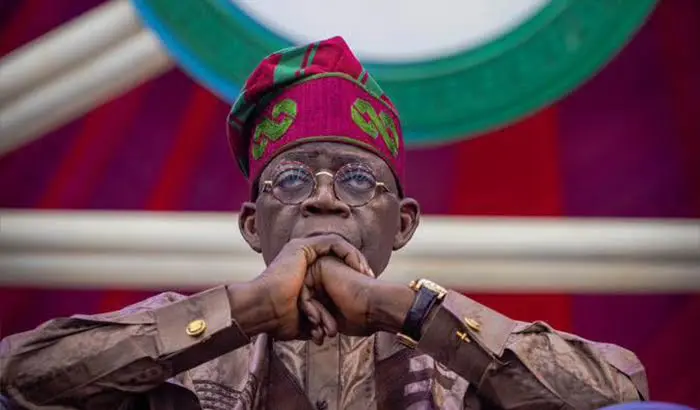
The October arrest of an X user, Innocent Chukwuma, by the Department of State Service (DSS) initially appeared as another case of cybercrime act abuse by the government. Little was however known of the rumoured coup plot against Tinubu.
While there had been questions over the President’s cancellation of the annual October 1st Independence Day rally, reason behind the move surfaced following the reported arrest 16 senior military officers by the Defence Intelligence Agency (DIA) over an alleged coup plot.
Trump’s Military Threat against Nigeria over Alleged Christian Genocide
While the Federal Government are still trying to get over the coup plot allegation, the following month would see the emergence of another national concern as the United President, Donald Trump, announced plan to launch military strikes on Nigeria.
Taking up the alleged Christian genocide controversies, Trump would in November disclosed plan to engage the Pentagon on possible military action as well as the renamed Department of War.
The US President, in a social media post, threatened cut off all assistance to the African country “if the Nigerian Government continues to allow the killing of Christians”.
Trump labelled Nigeria a ‘now disgraced country as he vowed go ‘guns-a-blazing,’ and “completely wipe out the Islamic Terrorists who are committing these horrible atrocities”.
The US President further declared Nigeria a Country of Particular Concern (CPC) while reiterating that plan is ongoing over the military action.
The development had kept the Federal Government on their heels with both the National Assembly and Tinubu sending delegates to the US for an engagement with the US lawmakers who had held weeklong debate over the Christian genocide claim in Nigeria.
While some Nigerians had lauded Trump over the planned military action, others expressed the concern over the possible consequences of America’s intervention in Nigeria’s insecurity challenges.
However, the Federal Government expressed readiness to work in cooperation with the US in fighting the insurgents.
As part of the agreement to work together, Tinubu sent delegates led by the National Security Adviser, Mallam Nuhu Ribadu, to the US where a meeting was held with Pentagon and the Department of War.
On their part, the US Congress sent a delegate led by Congressman Riley Moore visited Nigeria in December.
They met with the National Assembly before paying a visit to the Internally Displaced Persons (IDP) camp in Benue State.
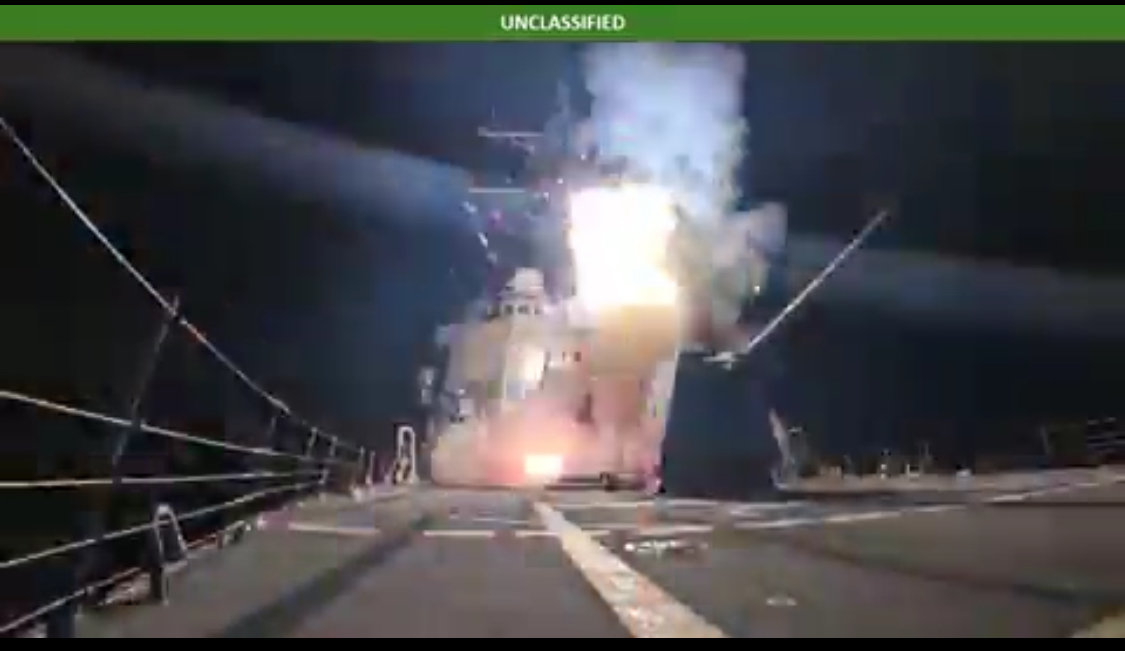
The outcome of the diplomatic engagement would eventually end in series of military airstrikes by the US on Christmas Eve.
A statement released by Trump his social media platform, Truth which was quoted by the White House explained the reason behind the attacks.
Trump was quoted as stating, .@POTUS “Tonight, at my direction as Commander in Chief, the United States launched a powerful and deadly strike against ISIS Terrorist Scum in Northwest Nigeria, who have been targeting and viciously killing, primarily, innocent Christians, at levels not seen for many years, and even Centuries!”
Trump reminded that he had previously warned those he called “these Terrorists” that if they did not stop the killings, there would be repercussions.
The air strike would be confirmed by the Federal Government with the Defence Headquarters also confirming being aware of the military action which it claimed was jointly conducted by the US and the Nigerian Army.
Meanwhile, the missiles were reported to have landed in Sokoto state with claims of hitting the hideouts of Lakurawa terrorists group.
However, debris of the missiles as well as unexploded munition landed in Offa, Kwara state, with several properties destroyed and residents injured.