

- Safiu Kehinde
The World Bank has hailed President Bola Tinubu over his reform drive as it declared Nigeria a frequent global reference point for reform implementation and results.
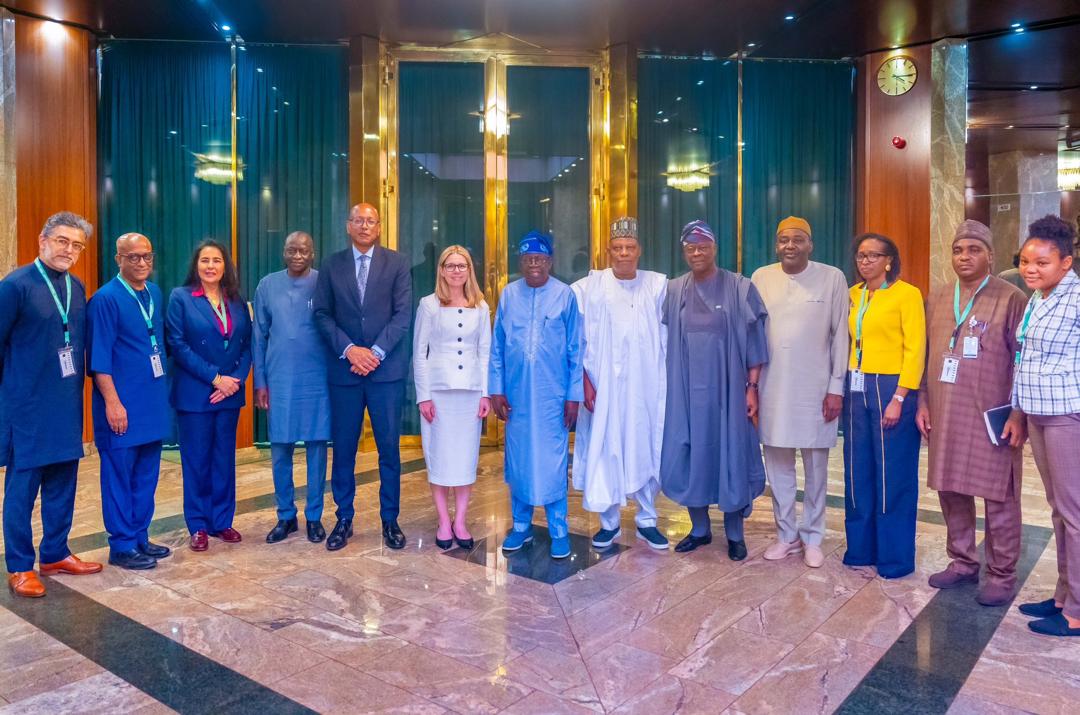
Ms Anna Bjerde, the bank’s Managing Director of Operations, said this on Tuesday while leading its Group delegation to the president at the State House, Abuja.
Bjerde said Nigeria’s reform outcomes over the last two years were commendable and widely discussed among global leaders, policymakers and investors.
“Nigeria is a frequent example in my discussions around the world because the results achieved in two years are really commendable.” She said.
Bjerde praised Tinubu’s consistency in communicating the necessity of reforms, noting that his steady leadership had built confidence despite implementation challenges.
“Even when reform implementation is difficult, there is no turning back. You are staying the course.” She added.
Bjerde said feedback from Nigeria’s private sector confirmed strong reform outcomes and improving investor sentiment.
On the bank’s forthcoming Country Partnership Framework, she said it would be anchored on Nigeria’s development vision of a $1 trillion economy and seven per cent growth.
She said job creation would be central to the partnership, citing Africa’s growing population and the urgency of employment for young people.
Bjerde identified infrastructure investment, agriculture modernisation and improved access to finance for small and medium enterprises as priority areas.
She said Nigeria’s low infrastructure spending relative to GDP required innovative public-private partnerships.
The World Bank boss disclosed that the bank’s public sector portfolio in Nigeria stood at about $17 billion, while the IFC invests about $5 billion annually.
She added that a new reform-linked budget support operation was being prepared, alongside expanded risk guarantees to attract private capital.
Bjerde said, “Your reforms and our budget support go hand in hand.”
Earlier, Tinubu said his administration’s reform agenda was irreversible, stressing that Nigeria had “its hands on the plough” and would not retreat.
“Since we went into this turn of reform, we are never going to look back.” He said.
The president said although the reforms were painful initially, they were necessary to secure long-term stability and growth.
Tinubu identified agriculture as a key pillar, citing mechanisation centres and openness to World Bank support on seeds and productivity.
He reaffirmed his commitment to transparency and accountability, describing fuel subsidy removal and exchange rate unification as difficult but necessary decisions.
Tinubu added, “The first reaction was high inflation, but it has come down dramatically. Now that it is stable, we can help investors.”
The president urged the bank to accelerate innovative financing, reduce bureaucracy and deepen skills development.
He assured the bank of Nigeria’s openness to deeper engagement and sustained partnership.