

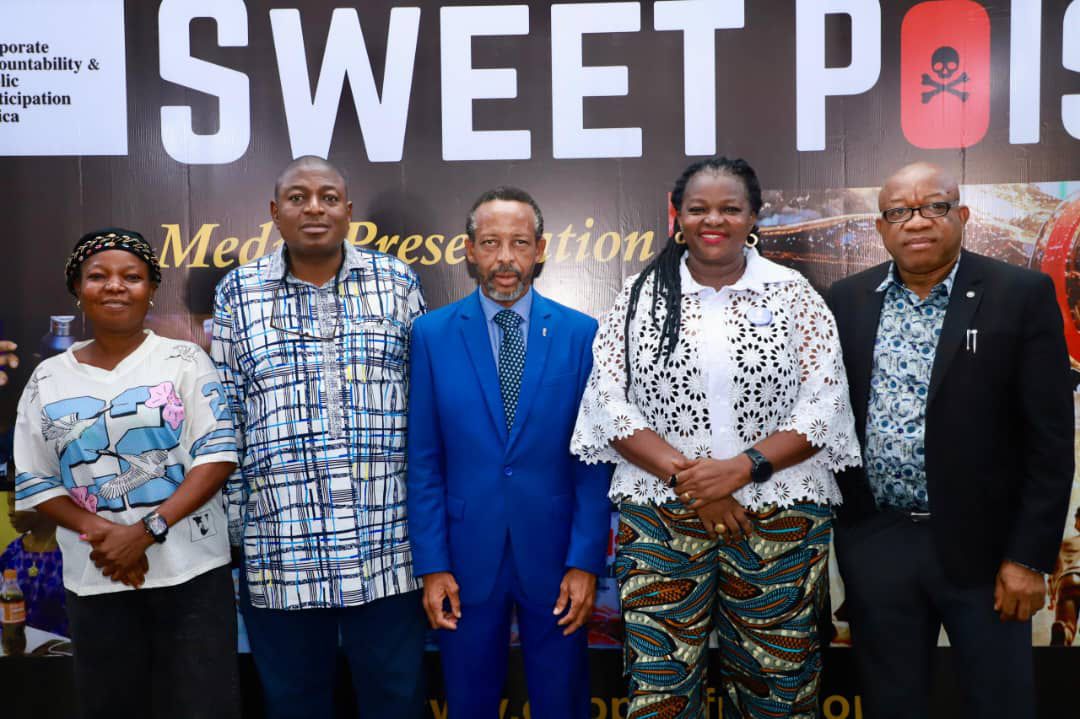
An advocacy group, Corporate Accountability and Public Participation Africa,(CAPPA), has unveiled a documentary highlighting the health risks associated with the excessive consumption of sugary beverages in Nigeria.
The documentary titled “Sweet Poison” revealed the danger of excessive consumption of sugary drinks.
Through the documentary, CAPPA explored the myths, deceptive marketing tactics and outright misinformation deployed by beverage companies to drive the consumption of unhealthy products.
According to CAPPA, the widespread intake of sugary drinks is contributing to the rising cases of Non-Communicable Diseases (NCDs) in Nigeria.
The documentary featured interviews with students who spoke about their drinking habits and awareness of the potential health implications.
One of the students, Chidera said, “Personally, I take two depending on the weather and my stress level. I can take three in a day if possible.
“Yes, I do think about how it affects me. But then I also think about my stress level because sometimes it’s a it’s a way for me to cope with stress. So that’s why I take that much.” She added.
Another student, Pelumi said, “I’m not going to say l’m taking much of it. But I just love something sugary and it’s not every day that I actually drink something like that.”
“But I think too much of sugary things cause diabetes though.” He added.
Some experts in the healthcare sector affirmed that excessive consumption of these drinks can lead to diabetes and obesity overtime.
Prof. Olufemi Fasanmade, a Consultant physician and endocrinologist at the Lagos State University Teaching Hospital (LUTH) stated;
“When you consume excessive amount of sugary drinks what happens is that these are calories. They are what we call empty calories. There’s no fiber, there’s nothing. It’s just like you pumping sugar into the bloodstream.”
“And because of that, most of it is converted into fat or is stored as fat. So you have a high number of people coming down with obesity.” He added.
Olufemi Akinbode, Executive Director Corporate Accountability and Public Participation Africa, expressed that these beverage companies engage in diverse promotional activities to entice the public with the product.
 “Sugary drinks corporations engage in diverse promotional activities to entice our people and they specifically entice our youths.” He said.
The former executive chairman of the Federal Competition and Consumer Protection Commission (FCCPC), Babatunde Irukera subscribed to the opinion that these drinks have become the gold standard for celebrations in Nigeria which is not appropriate.
“Sugar sweetened beverages are almost the gold standard for children consumption in Nigeria.
“And it’s been age old. And part of the reasons why these things have become the gold standard for celebrating those things is also a long history of advertising and commercials that have projected these things as the appropriate drink. But over the years, science has shown that they are not appropriate.” He said.
Dr Moyosore Makinde, consultant physician LASUTH, said that too much consumption of these drinks can cause insulin resistance and lead to type 2 diabetes if consumed for a long period of time.
“However, if this keeps happening over and over again, it can also affect pancreas that can also lead to insulin resistance and that’s how the person over time will develop type 2 diabetes. So, this happens over a very long period. It can take years, 10, 20 years, you know, for this to happen” she said.
According to the documentary, people living with diabetes have complained that the cost of managing it in Nigeria is too high.
Rinks Opaleye, a woman living with diabetes in Nigeria complained about how the price of medication has skyrocketed unimaginably.
“The insulin was N5000-N6000 before. But now it is N20000.” She exclaimed.
These people living with diabetes in Nigeria have expressed that the government does not support them in any way and they have to pay the heavy sum from their pockets.
The Founder, Diabetes and Limb Salvage Foundation, Osarenkhoe Chima, said: “It cost us so much to run the test. It cost us so much to buy consumable like the come strips. It cost us so much to eat the healthy food that we are asked. It cost us so much to drink water, that is portable that is clean water. So it’s a whole lot of expense without government participation in it.”
It was made known in the video that the government adopted a N10 per litre tax law on sugary drinks in 2021.
The advocates suggested that the government increase the final retail price to a minimum of 20 percent as a way to curb excess consumption and also generate revenue for the health sector.
“That’s why we are asking the Nigerian government to revise what we have upward to a minimum of 20% of the final retail price of drinks. So that it can serve as a deterrent in terms of reduction of consumption and as well raise revenue for government.” Olufemi Akinbode.
 The documentary further buttressed the urgent need for stronger policy action, including the review of the current Sugar Sweetened Beverages (SSB) tax excise rate to a percentage based regime, that is adjustable to inflation.
It also reinforced the need for revenue generated from the SSB tax to be earmarked for health interventions