

June 12 stands as a monumental milestone in Nigeria’s political history. It honours the historic 1993 presidential election, widely regarded as the nation’s freest and fairest in the history of electoral circles.
Today, the day serves as Nigeria’s official Democracy Day—a time to celebrate freedom, civil rule, and civilian governance.
However, as the nation marks this symbolic day, the atmosphere is heavy. Citizens are not just reflecting on democratic ideals; they are grappling with pervasive fears of insecurity that threaten the very foundation of the space called Nigeria.
Democracy is built on the promise of liberty and safety. The Nigerian constitution explicitly states that the security and welfare of the people shall be the primary purpose of government. A government is believed to be doing nothing if it’s doing all but protecting the citizens.
Across the geopolitical zones, this promise remains unfulfilled for millions. From the menace of banditry and mass kidnappings in the North-West to the persistent farmer-herder conflicts in the North-Central, and the devastating oil theft and violent separatism in the South, the atmosphere of peace in Nigeria is fast disappearing while the people are losing hope.
Celebrating democracy becomes a paradox when citizens cannot travel safely between cities or sleep in their homes without fear. True freedom cannot thrive in an environment dominated by terror.
Across many farming communities, farmers cannot access their lands due to insecurity. Where many can access their farms, they now have to pay ‘taxes’ to terrorist groups which enforce levy payment in return for allowing them access to their farms.
Just a few days ago, a community in Kebbi state expressed fears that non-state actors have imposed a levy of N40m on them otherwise they won’t be able to enter their farms.
Consequently, food inflation is worsening the economic hardships of the populace. Yam, rice, beans, vegetables and other consumables have shot out of the reach of ordinary citizens multiplying poverty in the most unpalatable ways.
Of course, our schools have become targets of attacks. Just on Wednesday June 10, a group of bandits stormed a secondary school in the Kabba/Bunu area of Kogi state and disrupted the West African Examinations Council exercise. Though the kidnapping mission was foiled, the vice principal of the school lost his life.
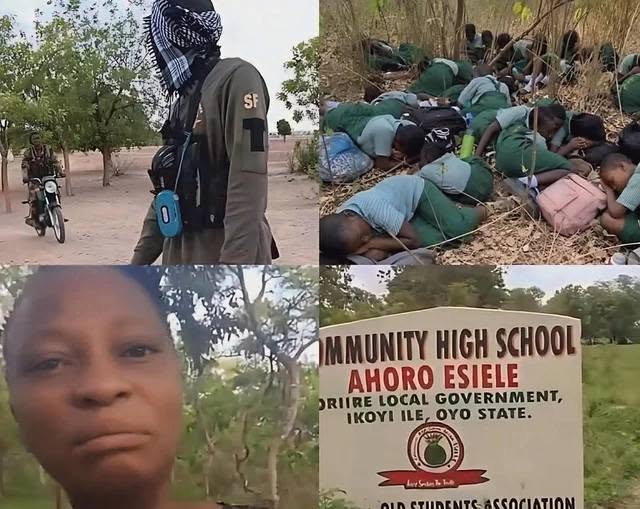
Before our very eyes, a school principal has been slaughtered after terrorists stormed a school in Oriire, near Ogbomoso and kidnapped teachers and students. These students and their teachers are in captivity as we write this; turning one of the kidnapped teachers, Mrs. Margaret Alamu into their spokesperson.
When schools become targets for mass abductions, the future of the nation’s youth is compromised. This is a terrible optic for a country that currently grapples with an estimated figure of 18.8m out-of-school children.
Insecurity does not just claim lives; it erodes trust in democratic institutions and weakens public faith in the capacity of the state to protect them.
Moreover, the strain on Nigeria’s security apparatus is undeniable. Armed forces are deployed on internal policing duties in almost all states of the federation. This overstretch highlights a structural flaw in the nation’s governance architecture.
Calls for comprehensive police reforms, state policing, and decentralized security networks have grown louder, yet decisive legislative and executive actions lag behind the urgency on the ground.
As we commemorate June 12, leadership must move beyond routine ceremonial speeches and national broadcasts. The greatest tribute the government can pay to the heroes of Nigeria’s democratic struggle is the restoration of peace and order.
Security agencies are crying for urgent systemic reforms, advanced technological tools, and improved welfare to counter evolving criminal tactics. Simultaneously, governance must address the root causes of unrest: grinding poverty, mass unemployment, and a lack of economic opportunities for a burgeoning youth population.
What Nigerians should be celebrating should not be that democracy is here with us just because those who occupy Aso Villa and the 36 states’ Government Houses are not wearing khaki and jackboots.
What we should be marking is the presence of human dignity, freedom, justice, and safety. Nigeria has shown remarkable resilience by maintaining uninterrupted civilian rule for 27 years.
This endurance, however, must not be taken for granted. To safeguard the future of this democracy, the government must confront insecurity with total political will. Only when citizens can move, work, and live without fear will the true spirit of June 12 be fully realized.