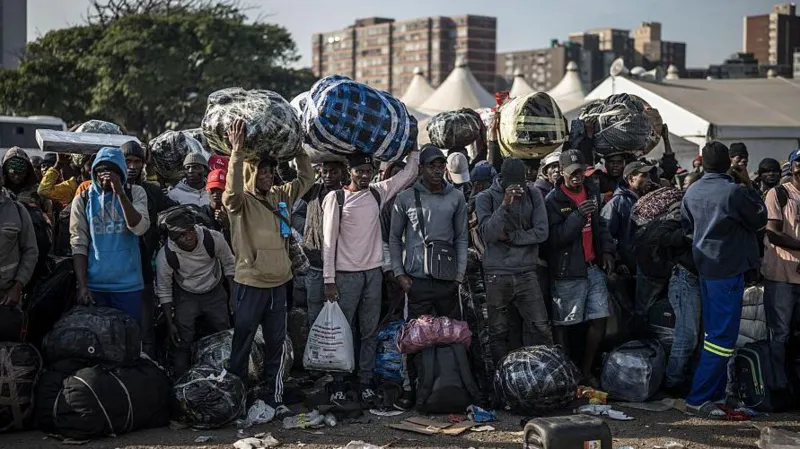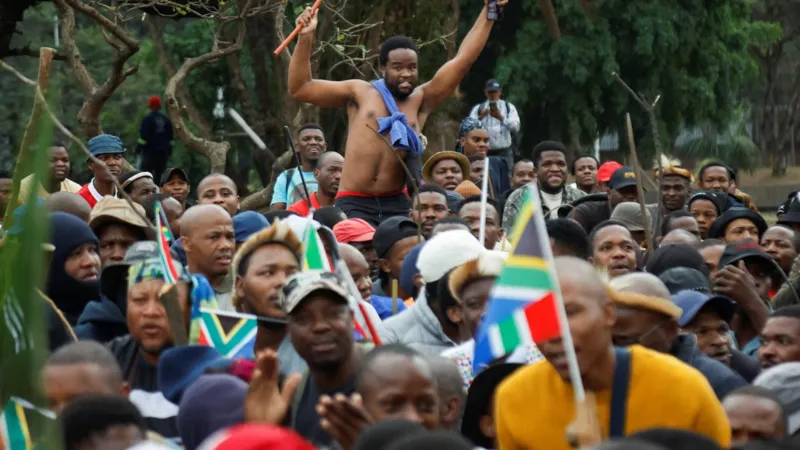
Police officers have been deployed across South Africa because of fears that anti-immigration protests could turn violent as President Cyril Ramaphosa urged demonstrators to refrain from “intimidation, threats or ultimatums”.
The protests mark an unofficial deadline set by campaigners for all undocumented foreigners to leave the country.
Many have already fled to escape violence and intimidation. South African police say 25,000 have been repatriated so far. Most are from other African countries.
One undocumented Malawian told the BBC he was “happy to be going back” but “heartbroken” to be leaving behind four young children.
Johannesburg, where one of the protests is taking place, is unusually quiet. Shops in the city centre are closed, while police visibility is high on major streets.
Police said that five people were arrested in Johannesburg’s biggest township, Soweto, for allegedly looting a foreign-owned shop.
Five people were also arrested for allegedly breaking into a tuck shop in Hammarsdale in KwaZulu-Natal province.
Many businesses in central Durban, the main city in the province, are also shut.
Ramaphosa met some of the protest leaders on the eve of the marches in a bid to defuse tensions.
He has repeatedly warned demonstrators to act peacefully, while also accepting the need for immigration reforms.
“Some foreign nationals who live in South Africa are here lawfully,” he reminded citizens in his weekly newsletter.
“They work, study, raise families, invest in our economy and contribute positively to our society. They too are entitled to the protection of our laws and our Constitution.
“The right to protest and freedom of expression does not allow people to threaten or intimidate others, or to engage in acts of vandalism or violence,” he wrote.
There are more than three million documented foreign nationals in South Africa, according to official figures.
The statistics do not record the many more migrants believed to be in the country without papers – a bone of contention for the protesters.
Police said that about 50,000 migrants had been arrested since January for being in the country illegally.