

- Safiu Kehinde
A Lagos-based woman, Florence Osanyintuyi, has decried the indiscriminate dumping of refuse in public spaces by residents despite repeated awareness campaign.
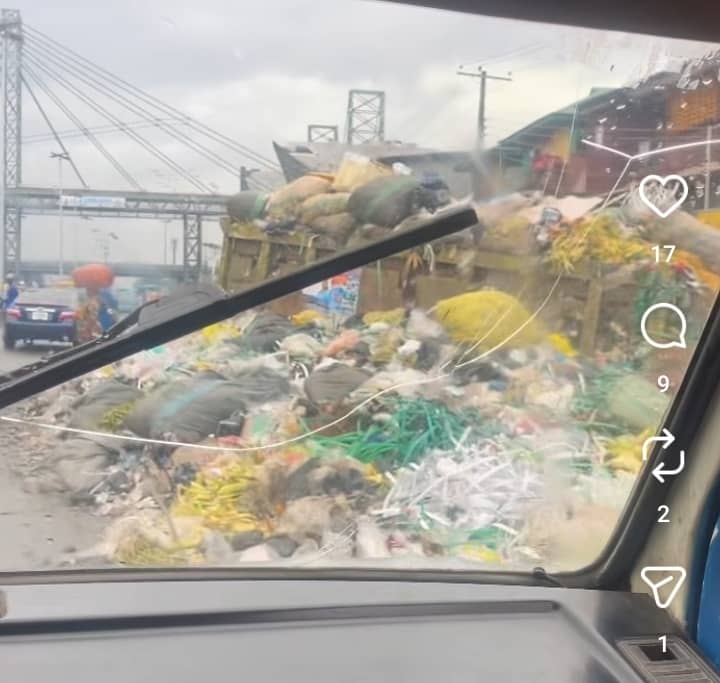
Osanyintuyi expressed her displeasure with the conduct in a post shared on her Instagram handle on Tuesday as she recounted sighting massive pile of wastes along bus-stops and walkway in Oshodi area of Lagos.
Video attached to the post showed stretch of waste heaps along the walkway leading to the monumental Oshodi Bus Terminal.
The founder of Zeevah Education and Empowerment Foundation raised concern over public health and worsened flooding likely to be caused by the waste.
“On my way out this morning, I passed one of Lagos’ busiest public bus-stops and was greeted by this heartbreaking sight, a massive pile of waste in the middle of a place thousands of people pass through every day.
“Beyond how unpleasant it looks, this is a serious public health concern.” She wrote.
While highlighting environmental impact and health implications that can be caused by the waste, Osantyintuyi raised questions on reason behind the indiscriminate waste disposal.
“We’re in the rainy season. Waste like this can block drainage systems, worsen flooding, contaminate water sources, and create the perfect breeding ground for disease outbreaks like cholera.
“What’s even more worrying is that this is an area where many people, including school children, rely on affordable street food. The health risks are enormous.
“It raises two important questions:
“Why do people continue to dump waste indiscriminately in public spaces?
“And what measures are in place to prevent and enforce proper waste disposal?” She asked.
Osanyituyi called for collective responsibility in keeping communities clean, stressing that the government cannot bear the responsibility alone.
She also stressed the need for responsible waste disposal system.
“Waste management is not just the government’s responsibility. It is also about public behavior, accountability, and enforcement.
“We all have a role to play in keeping our communities clean, but the systems that support responsible waste disposal must also work.
“Lagos deserves better than this.” She said.