

- Safiu Kehinde
The Minister of Federal Capital Territory (FCT), Nyesom Wike, has urged religious leaders across Nigeria to maintain political neutrality and adopt a balanced perspective when evaluating government’s the performances.
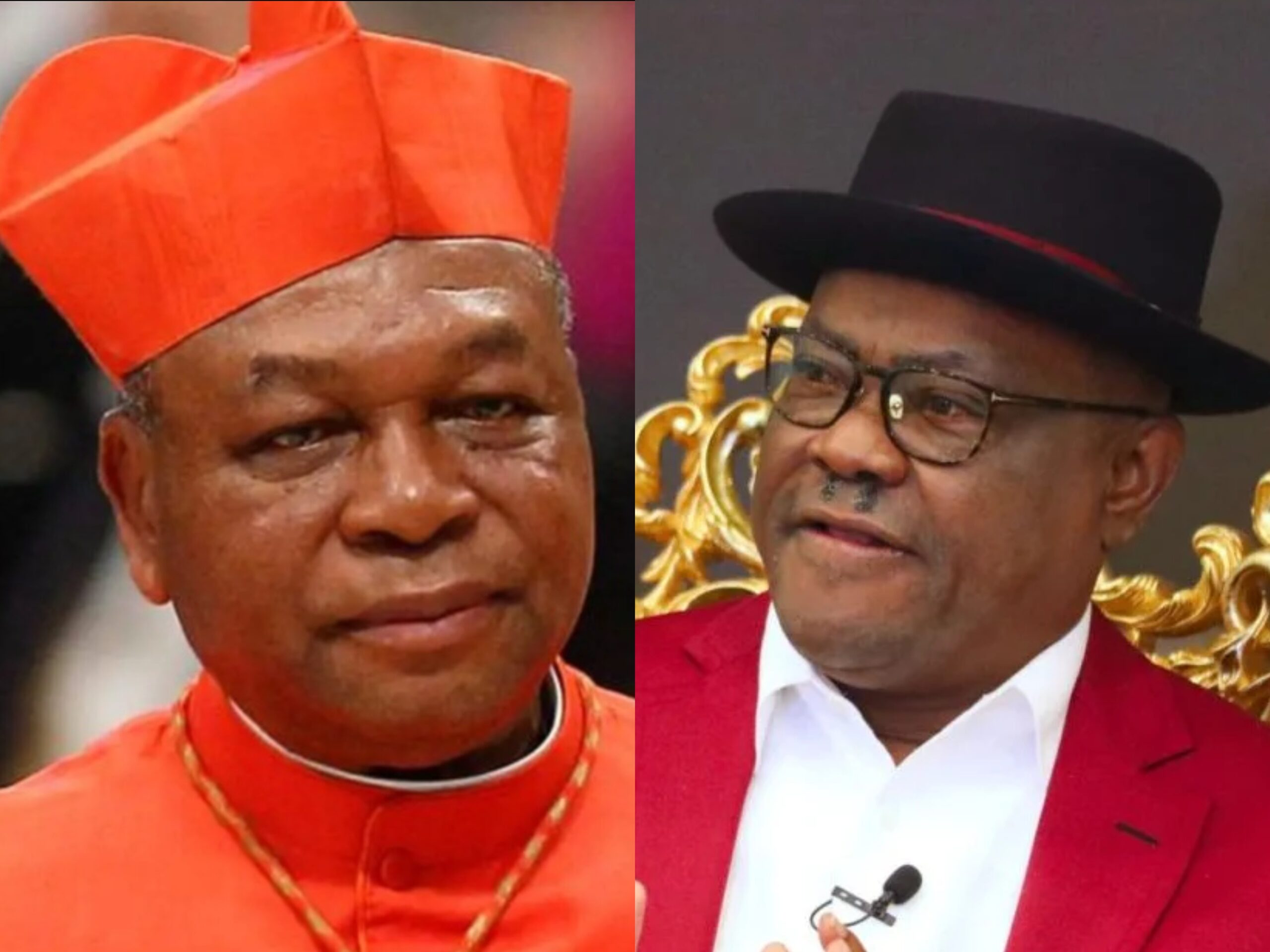
Wike stated this during a media chat in Abuja on Tuesday, while reacting to the recent public disagreement between the Presidency and the Archbishop Emeritus of Abuja, Cardinal John Onaiyekan.
Cardinal Onaiyekan had reportedly warned that voters would not turn out in the 2027 general elections if Nigerians conclude that victory is already guaranteed for the ruling All Progressives Congress, APC.
Onaiyekan lamented that Nigeria is yet to conduct a truly free and fair election, linking low voter turnout to widespread disillusionment and urging those in power to act urgently to restore trust ahead of 2027.
The clergyman’s remark stemmed from the Catholic Bishops’ Conference of Nigeria’s recent claim of economic hardship, insecurity and democratic concerns in the country, which the presidency rebutted.
Reacting, Wike warned that faith leaders risk losing their moral authority and credibility when their public commentaries appeared politically motivated or relentlessly negative.
While affirming that constructive criticisms remained a vital part of governance, he, however, stressed that genuine objectivity required religious figures to acknowledge government achievements alongside pointing out areas of possible improvement.
Referencing Onaiyekan’s partisan stance during the 2023 general elections, the minister said: “If a religious leader is seen taking a side, it becomes difficult for people to see their comments as helpful.
“It’s not every time you say things are bad; nobody has heard you say the government has done this well,” he said.
Wike emphasised that public officials were more likely to dismiss pastoral feedback as politically driven rather than honest counsel if achievements were deliberately ignored.
“The point I am trying to make is that, as a leader, you should commend the government when it has done well in certain areas.
“Criticise, but acknowledge areas of progress, while noting where improvements are needed,” he added.
The minister urged members of the clergy to foster constructive engagement that supports national development.