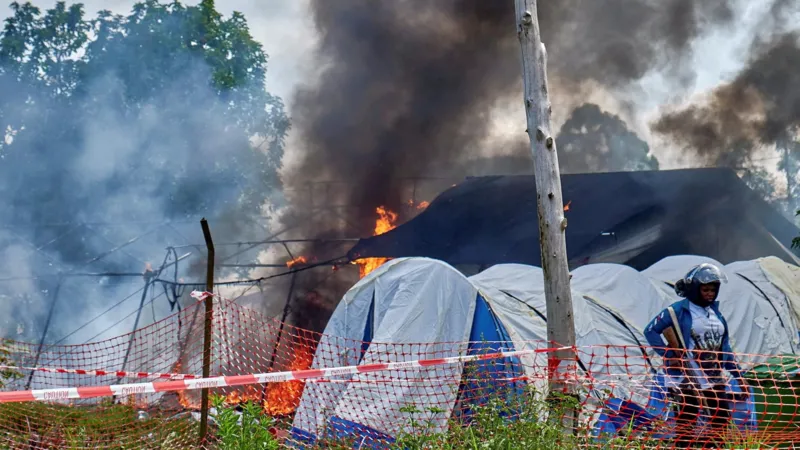
An angry crowd set alight a section of a hospital at the epicentre of the Ebola outbreak in the eastern Democratic Republic of Congo after family and friends of a young man thought to have died from the virus were prevented from taking his body away for burial.
“They started throwing projectiles at the hospital. They even set fire to tents that were being used as isolation wards,” local politician Luc Malembe Malembe told the BBC about the scene he witnessed at Rwampara General Hospital.
In the chaos, police fired warning shots to disperse the crowd.
The body of a dead Ebola victim is highly infectious and the authorities need to ensure safe burial to stop the spread of the virus.
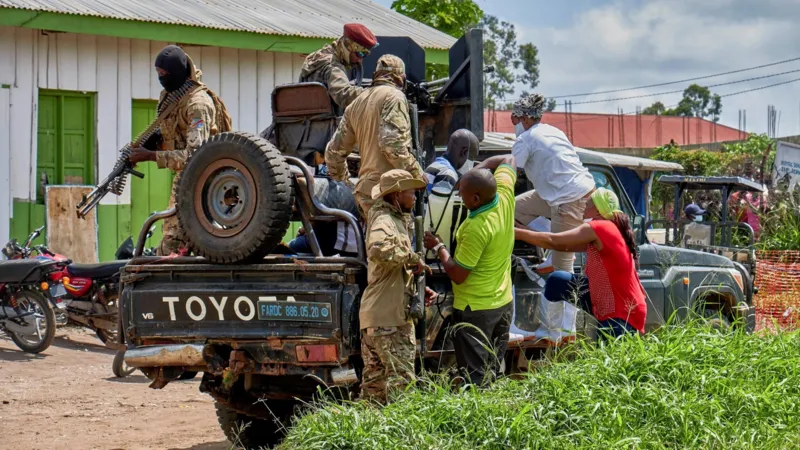
Medical workers at the Rwampara hospital, located near the city of Bunia in Ituri province, where almost all of the cases have been reported, were placed under military protection as the police moved in to restore order.
A healthcare worker was injured by stone-throwing protesters before law enforcement agents intervened, a hospital worker told the AFP news agency.
The man who died was a popular figure in the local community and those upset by his death did not “grasp the reality of the disease,” Jean Claude Mukendi, who is co-ordinating the security response to Ebola in Ituri, told the Associated Press.
Witnesses told Reuters the young man was a footballer who had played with several local teams. His mother told the news agency she believed her son had died of typhoid fever, not Ebola.
Malembe said the crowd did not believe the virus, which has so far killed more than 130 in eastern DR Congo, was real.
“People are not properly informed or sensitised about what is happening. For a certain segment of the population, especially in remote areas, Ebola is an invention by outsiders – it does not exist,” the politician said.
“They believe it is the NGOs and hospitals creating this to make money, and this is tragic.”
He said two tents had been burned down, along with a body that had been due to be buried.
Congolese Foreign Minister Thérèse Kayikwamba Wagner called it a “very frightening situation” for communities to be in.
“I think it is normal and it would be normal in any setting that all sorts of reactions are triggered, including challenging or questioning narratives that they might not feel comfortable with,” she told the BBC’s Newsday programme.
She went on to say that the authorities were “ramping up” their activity in affected areas to ensure communities feel safe, understood and heard.