

- Odibo Victory
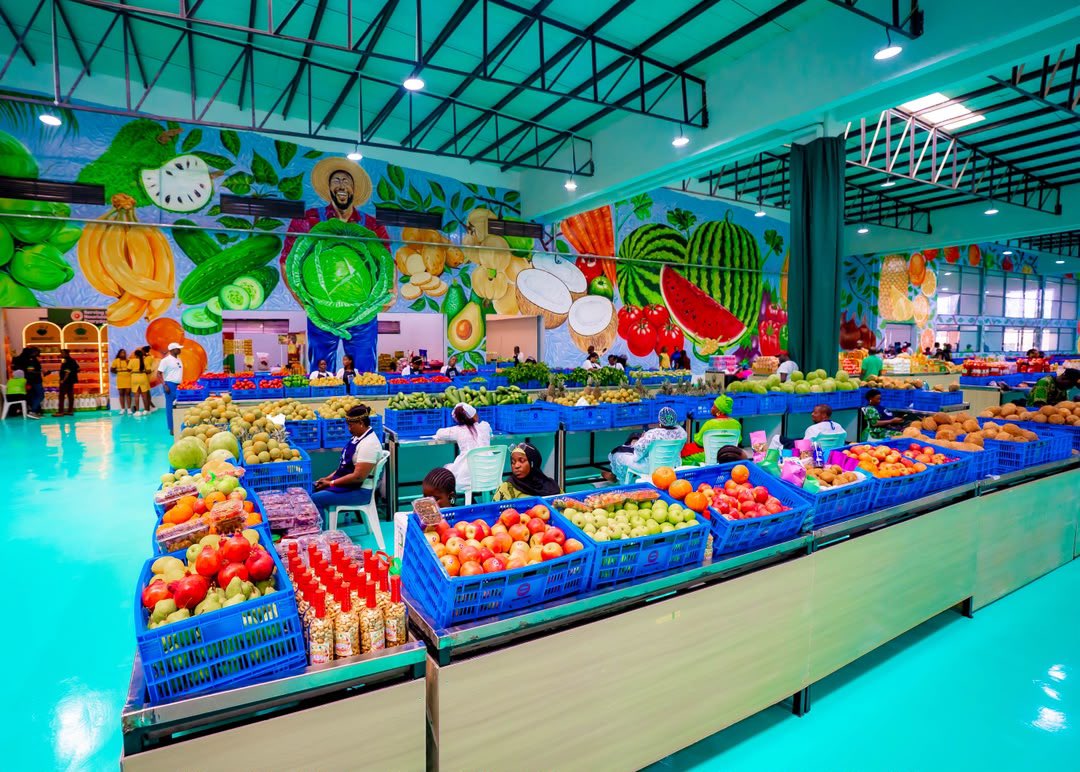
The inauguration of the Lagos Fresh Food Hub, berthed in Pen Cinema, Agege, has sparked excitement among Lagos residents.
The Hub was inaugurated by the Governor of Lagos State, Babajide Sanwo-Olu, on Wednesday.
Sanwo-Olu made the announcement on his official X handle on Wednesday stating that the Hub is part of the efforts by the Lagos State Government to make food distribution easier and more efficient across the state.
Sanwo-Olu said the facility was designed to make it easier and more efficient to move food from farmers and suppliers to communities across Lagos.
“Today, I commissioned the Lagos Fresh Food Hub in Pen Cinema, Agege, a modern facility designed to make it easier and more efficient to move food from farmers and suppliers to communities across Lagos,” he said.
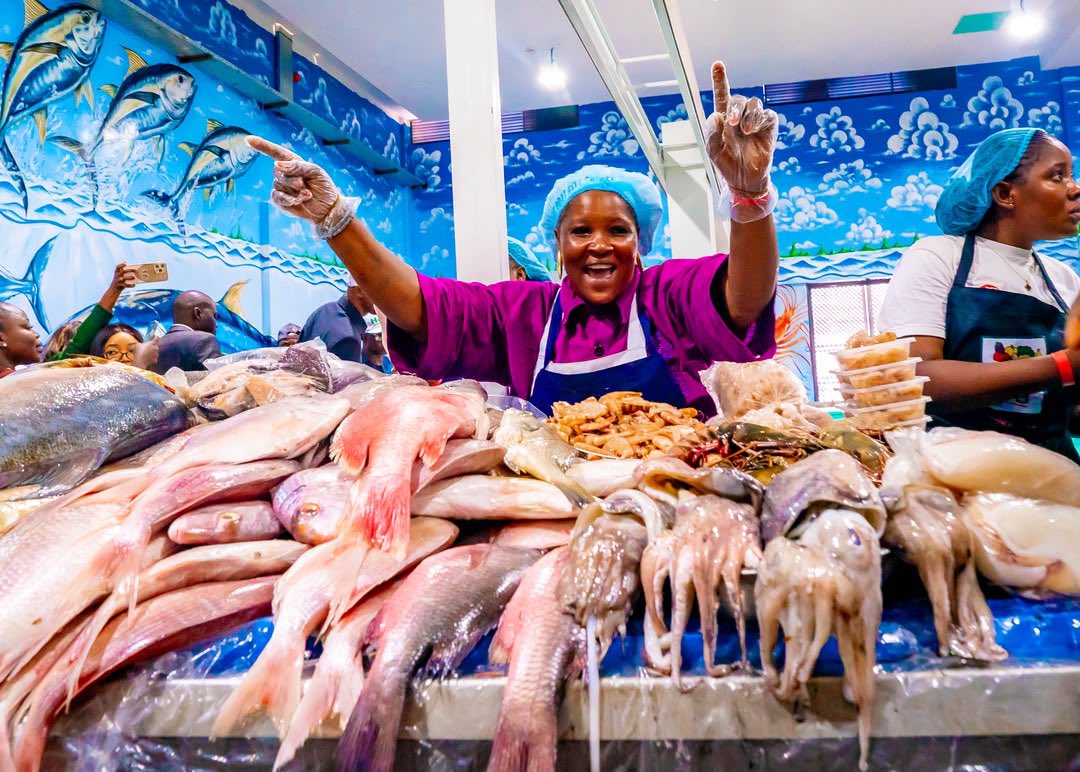
The governor said the hub, built on 7,000 square metres, provided space for hundreds of traders, dry and cold storage facilities, a dedicated seafood section, parking and electric vehicle charging points.
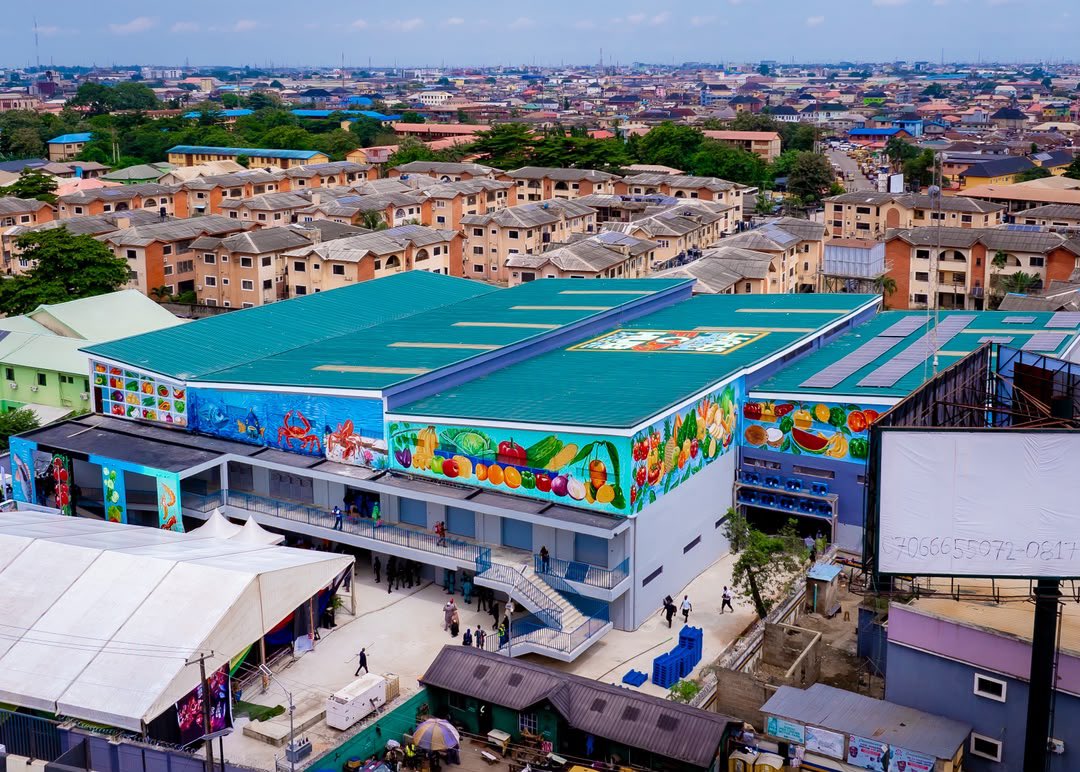
He said the facility would also bring farmers, traders, retailers, institutional buyers and consumers together in a more organised food distribution system.
“More importantly, it brings farmers, traders, retailers, institutional buyers and consumers together in a more organised food distribution system,” he said.
According to him, Agege is one of the middle-level hubs in the state’s wider food distribution network and was supplied by the Central Food Security and Logistics Hub at Ketu-Ereyun.
“Agege is one of the middle-level hubs in our wider food distribution network, supplied by the Central Food Security and Logistics Hub at Ketu-Ereyun.
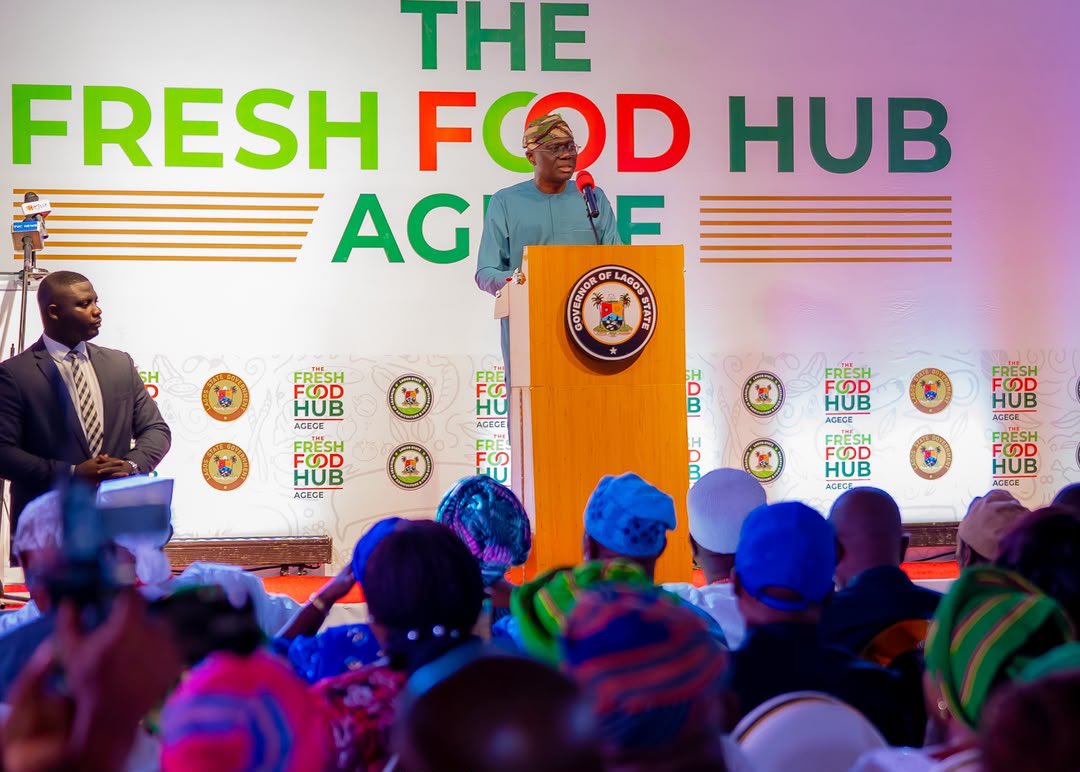
“Together with hubs like Mushin, we are bringing food distribution closer to the people and strengthening food security across Lagos,” he said.
Sanwo-Olu described the facility as a critical component of his administration’s strategy to strengthen food security, noting that food security was central to the development, stability and prosperity of Lagos.
He stressed that a city that could not feed its people would not effectively plan for sustainable growth.
The governor said Lagos’ food economy was valued at more than N1.6 trillion, adding that more than 75 per cent of food consumed in the state was produced outside Lagos and had to pass through complex and fragmented supply chains before reaching consumers.
He said the situation made it imperative for the government to address not only food production but also aggregation, transportation, storage, processing, financing, regulation and distribution.
“Food security is not just a production challenge; it is a system challenge.
“We must aggregate better, move food faster, store food better, process food better, finance it better and regulate better,” he said.
He said his administration was developing an integrated food system that would connect farmers, aggregators, processors, logistics operators, traders and consumers from the point of production to the dining table.
Sanwo-Olu said the Agege facility was part of a wider network of food hubs being established across Lagos to bring modern food infrastructure closer to communities and improve the efficiency of food distribution.
He disclosed that the state had already inaugurated the Fresh Food Hub in Abijo and was developing similar facilities in other parts of Lagos as part of efforts to create a connected food distribution network.
The governor said the Agege facility would reduce food losses, improve market access for farmers and create opportunities for traders and other participants in the agricultural value chain.
“The long-term objective is unambiguous: We want to have structured modern food hubs in almost every part of Lagos State so that no community is left outside the network,” he said.
Sanwo-Olu also said the state was also matching infrastructure investment with human-capital development through the training of farmers and agricultural entrepreneurs, as well as programmes designed to encourage young people to pursue careers in agriculture.
He said more than 4,000 young people had been engaged through the Lagos Agripreneurship Programme.
Sanwo-Olu added that the state had also introduced agricultural programmes in schools to expose students to opportunities in the sector.
He said the state was investing in the development of a modern food ecosystem because government alone could not guarantee food security.
“We need the private sector, farmers, financial institutions, logistics operators, traders, technology providers, development partners and our communities.
“All of us are indispensable,” he said.
According to him, the success of the food system would be measured by whether farmers earned better returns, traders expanded their businesses, consumers accessed nutritious food at affordable prices and investors continued to have confidence in Lagos.
Sanwo-Olu said the Agege Fresh Food Hub represented a transition from infrastructure development to the operation of an integrated food system.
“We are moving from construction to operation, from projects to a system, and from promise to performance,” he said.
The governor commended partners in the project and inaugurated the food hub for use by residents, traders, farmers and other stakeholders in the agricultural value chain.
Earlier, the Chairman of Agege Local Government, Mr Ganiyu Obasa, said the facility represented a new chapter in the economic life of Agege and an opportunity to strengthen the local food system.
“Today is not merely about commissioning another physical structure.
“We are commissioning an idea, an opportunity, a stronger food system and, most importantly, a new chapter in the economic life of Agege,” he said.
Obasa commended the Lagos State Government for investing in modern market and agro-food infrastructure, noting that the initiative would strengthen the connection between farmers, aggregators, traders, distributors and consumers.
He said the strategic location of Agege made the facility particularly important because of the area’s longstanding commercial activities and its position as a major commercial corridor linking communities and markets.
“For generations, our people have demonstrated resilience, entrepreneurship and ingenuity, building businesses that have become sources of livelihood for families and communities.
“This fresh food hub adds another important dimension to that economic identity,” he said.
The state Commissioner for Agriculture and Food Systems, Ms Abisola Olusanya, said the Agege Fresh Food Hub was designed as an important node in the state’s emerging food distribution network.
Olusanya said the facility would support aggregation, storage, logistics, wholesale and retail distribution, while helping to address food losses, traffic congestion associated with food trading and inadequate storage facilities.
She said the project was supported by a 351-page operating framework covering operator selection, produce receiving and quality control, storage management, sanitation, waste management and the use of training facilities.
According to her, the facility occupies about 7,000 square metres and includes a 4,000-square-metre trading floor, cold-storage facilities, rice storage capacity, seafood facilities, vehicle parking and electric-vehicle charging points.
Olusanya said the facility was projected to facilitate more than N5 billion in food transactions, adding that its commercial operations would be fully developed through an organised onboarding and governance system.
She said the project was intended to demonstrate what a modern food market could offer and eventually serve as a benchmark for food shopping facilities in Lagos, Nigeria and Africa.
The commissioner said the hub was not an isolated market but part of a wider network of food distribution facilities being developed by the Lagos State Government.
She commended the state government, partners, ministries, departments and agencies involved in the delivery of the project, saying their contributions had helped transform the vision into physical infrastructure.
Olusanya said the ultimate objective was to establish an efficient and connected food system capable of moving food from farms to markets in a safer, faster and more organised manner.