

- Safiu Kehinde
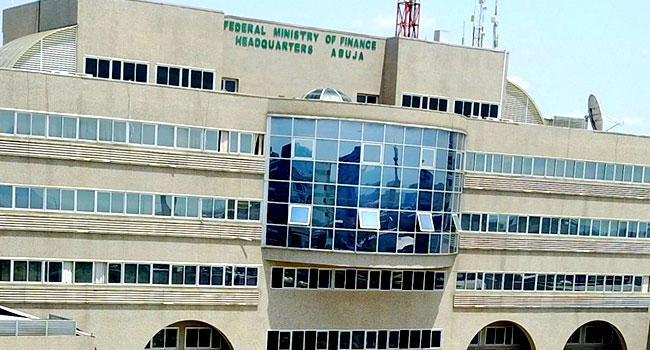
The Federal Ministry of Finance has attributed the latest growth in Nigeria’s Gross Domestic Product, GDP, to the increase in productivity recorded in the manufacturing and agricultural sectors.
NPO Reported that the Nigerian Bureau of Statistics had yesterday released the GDP Q2 2026 Report which pegged the latest figure at 4.43% (year-on-year) as against the 4.23% recorded in the second quarter of 2025.
In nominal terms, Nigeria’s aggregate GDP rose to N119.27 trillion in Q2 2026, representing an 18.43 per cent increase from N100.7 trillion.
Reacting in a statement issued on Tuesday, the ministry of finance identified the manufacturing and agricultural sectors as the two leading sectors responsible for the GDP growth alongside 25 other economic sectors.
According to the ministry, the manufacturing sector grew by 3.24 per cent, which is over twice more than the 1.60 per cent recorded in Q2 2025.
In the same vein, agriculture saw 4.39 per cent growth, up from 2.82 per cent, underscoring stronger production and value-chain.
‘In Q2 2026, 27 economic subsectors recorded real growth above 3.0 per cent, up from 23 subsectors in Q2 2025, showing that expansion is no longer concentrated in a handful of industries.
‘The productive sectors led the way. Manufacturing grew by 3.24 per cent, more than double the 1.60 per cent recorded in Q2 2025, reflecting improved industrial output.
‘Agriculture expanded by 4.39 per cent, up from 2.82 per cent, underscoring stronger production and value-chain. performance. Services, the largest driver of growth, expanded by 4.60 per cent, up from 3.94 per cent.’ The statement partly read.
Meanwhile, the ministry noted that the strong Q2 2026 outturn lifted real GDP growth for the first half of 2026 to 4.16 per cent, up from 3.68 per cent in the corresponding period of 2025.
This. according to the statement, is a clear signal of sustained strengthening across the economy.
The ministry also admitted that the relative stability and steady appreciation of the exchange rate further amplified these gains in dollar terms.
‘The naira appreciated by more than 12 per cent between H1 2025 and H1 2026, resulting in an expansion of the economy by approximately 17 per cent in U.S. dollar terms over the period, a pace that, if sustained along with the various social programmes of the Government, will meaningfully strengthen dollar incomes, improve purchasing power and lift millions of Nigerians out of poverty.’ It said.
Given this momentum, the finance ministry held that Nigeria is well positioned to consolidate its standing among Africa’s largest economies and to advance toward the Government’s target of a USD 1 trillion economy by 2030.
‘The International Monetary Fund has already ranked Nigeria among the top 10 contributors to global real GDP growth in 2026, projecting the country to account for roughly 1.5 per cent of world growth this year, ahead of several advanced and emerging economies.
‘Continued macroeconomic stability, sustained growth across productive sectors, and improving investor confidence would accelerate Nigeria’s progression toward becoming Africa’s largest economy by 2028.’ It said.