

- Safiu Kehinde
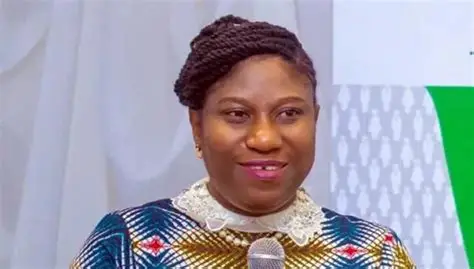
The Executive Director and CEO of the Wole Soyinka Centre for Investigative Journalism (WSCIJ), Motunrayo Alaka, has harped on the need for the government and state actors to recognise and respect press freedom in Nigeria.
Alaka described freedom of the press as a catalyst for inclusive development and a necessity for nation’s security.
The WSCIJ boss made this known during her address at the Nation Foundation Journalism’s 2026 World Press Freedom Day symposium held on Monday.
Speaking on the theme; “From Press Freedom to People’s Freedom: Activating Citizenship for Human Rights, Development, Security, and Peace”, Alaka explained that journalism is essential for influencing an informed decision by citizens and keeping them in touch with government’s policies and developmental strides of the nation.
“Nigeria’s development trajectory reflects both potential and paradox.
“We saw growth to over $423 billion by 2023, yet poverty deepened to 38.9%.
“This is “growth without inclusion.” Economic growth has not translated proportionately into improved living conditions for many citizens.
“In this context, journalism becomes essential. Information is a public good. Without it, citizens cannot make informed decisions about their lives or engage meaningfully with governance.” She said.
The WSCIJ CEO cited two investigative stories that created awareness to the spread of harmful products and defect in public infrastructure within their community.
“Investigative stories such as Deadly Portions: Nigeria’s Herbal Gin Nightmare, a 2014 three-part by Olatunji Ololade and Olukunle Akinrinade exposed harmful products and protected public health.
“Sharon Ijasan’s reporting aired on TVC on basic education in 2018 led to the rebuilding of the Bethel Primary School Ikorodu where children learned under trees by the Lagos State Government within seven months.
“Journalism is beyond stories it is a proven interventionist strategy for development.
“Development is the expansion of freedoms, as Amartya Sen, the Indian economist and philosopher who in 1998, he received the Nobel Prize in Economic Sciences for his contributions to welfare economics, argued.
“But freedoms cannot expand in the dark. Journalism provides the knowledge base for development.” She said.
On the impact of press freedom on peace and security, Alaka maintained that it is one of the conditions that makes stability possible.
She stressed that independent media acts as an early warning mechanism which identifies the smoke before the fire erupts.
“Nigeria’s security context is currently stretched to a breaking point. By late 2025, reports indicated over 400 people kidnapped in a single month.
“Defence spending has reached 5.9 trillion Naira, yet the challenge remains systemic. Here is the foundational truth: Press freedom is a necessity for security.
“It is often treated as a luxury reserved for stable societies, but it is one of the conditions that makes stability possible. Independent media acts as an “early warning mechanism.” It identifies the smoke before the fire erupts.” She said.
While admitting to the risk that coverage of insecurity posed to journalists, Alaka harped on the need for provision of resources, safety, and access to journalists covering the beat.
She also called for the expansion in scope of coverage beyond speaking about budgets for ammunition and recruitment of more soldiers.
According to her, the spotlight must also be shone on the connection between forced child marriage and the proliferation of children who are raised or mostly not raised by their child-mother and the recruitment of child soldiers amongst other ramifications of the conflict.
On steps to be taken to ensure press freedom, Alaka charged the government to move from suspicion and promises to dialogue that is followed by action and a recognition of the protection of press freedom as a duty.
“Protecting journalists is not a favour to the media; it is a duty to the state.” She said.
The WSCIJ CEO also charged media organisations to invest in a national framework for media sustainability, independence, and protection.
“We must invest in a National Framework for Media Sustainability, Independence, and Protection – The WSCIJ published a statement yesterday advancing this thought.
“We must ensure fair value for content and safeguard our newsrooms against the malicious use of AI.” She said.
She also cautioned citizens against attacking journalists while urging them to support credible media.
“Recognise that an attack on the press is an attack on your own freedom. Support credible media. Verify before you share.” Alaka said.
She called for collective investment in press freedom, stressing that a society that protects truth secures its future.
“The future of peace will not be built only in government chambers; it will be shaped through truth-telling, accountability, and active citizenship.
“If we truly desire a future at peace, then we must invest in press freedom as a foundational system because a society that protects truth secures its future.
“Let us therefore commit, deliberately and collectively, to strengthening journalism, protecting journalists, and engaging as responsible citizens.
“A society that commits to reporting until something happens is a society that produces change.
“Let us build a Nigeria where information is trusted, voices are heard, and institutions are accountable. A Nigeria where truth is safe—and those who tell it are safer.” She added.