

-
As Canadian Varsity Don Tours Nigeria With Latest Poems
- Odibo Victory
A Nigerian-Canadian university don and poet, Dr. Adesola Ademola has identified the use of rice as bait Nigerian politicians use to secure votes knowing that the qualities of lives of the citizens have been badly reduced owing to bad governance.
Ademola, an Assistant Professor in the Department of English, Languages and Cultures at Mount Royal University, Calgary, Canada, Dr. Adesola Ademola, said at every election circle, the hapless citizens believe they have no choices than to accept the meagre handouts from political office seekers knowing that their lives have been greatly reduced to almost nothing.
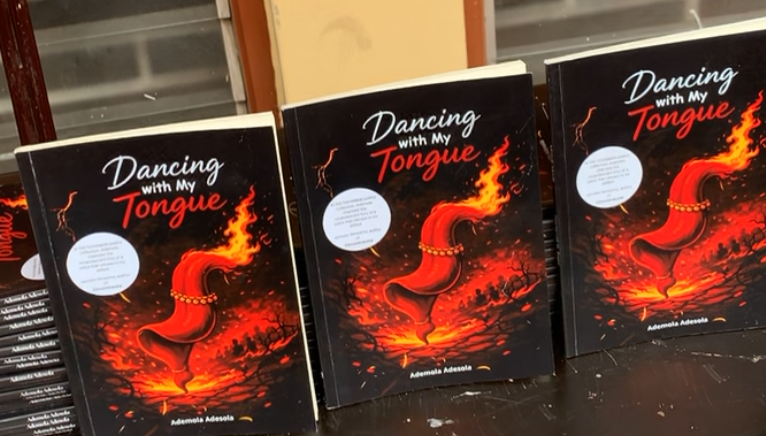
The university don stated this while reading some of the poems in his latest collection, Dancing With My Tongue, a collection of 56 poems exploring themes of politics, racism, identity and migration.
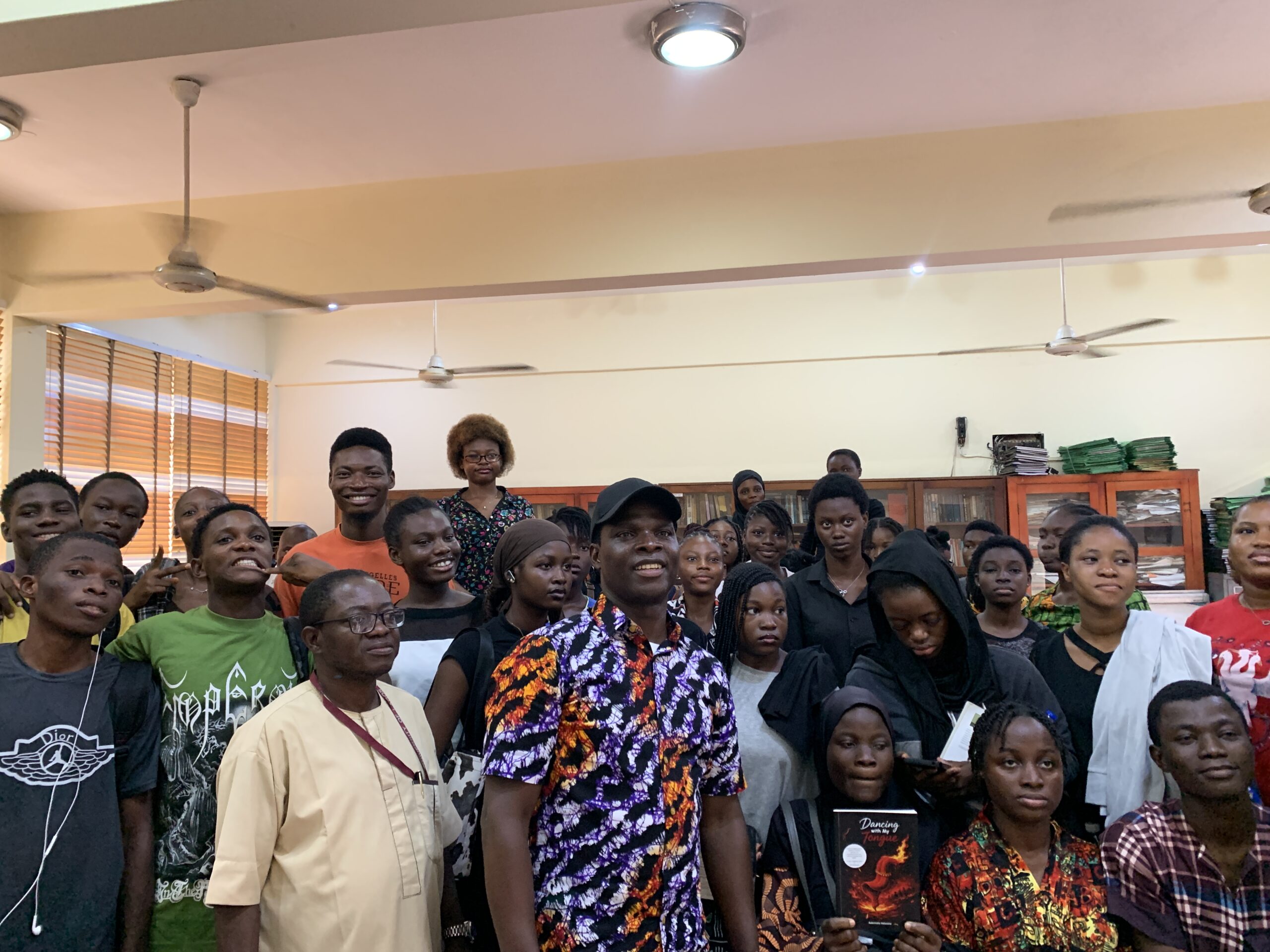
The collection was unveiled during a book reading event co-organised by Ademola and the Department of English, University of Lagos (UNILAG).
The event, convened by a lecturer in the Department of English, Dr. Abayomi Awelewa, brought together academics, students and media practitioners to celebrate the author’s latest work and explore the stories behind the poems.
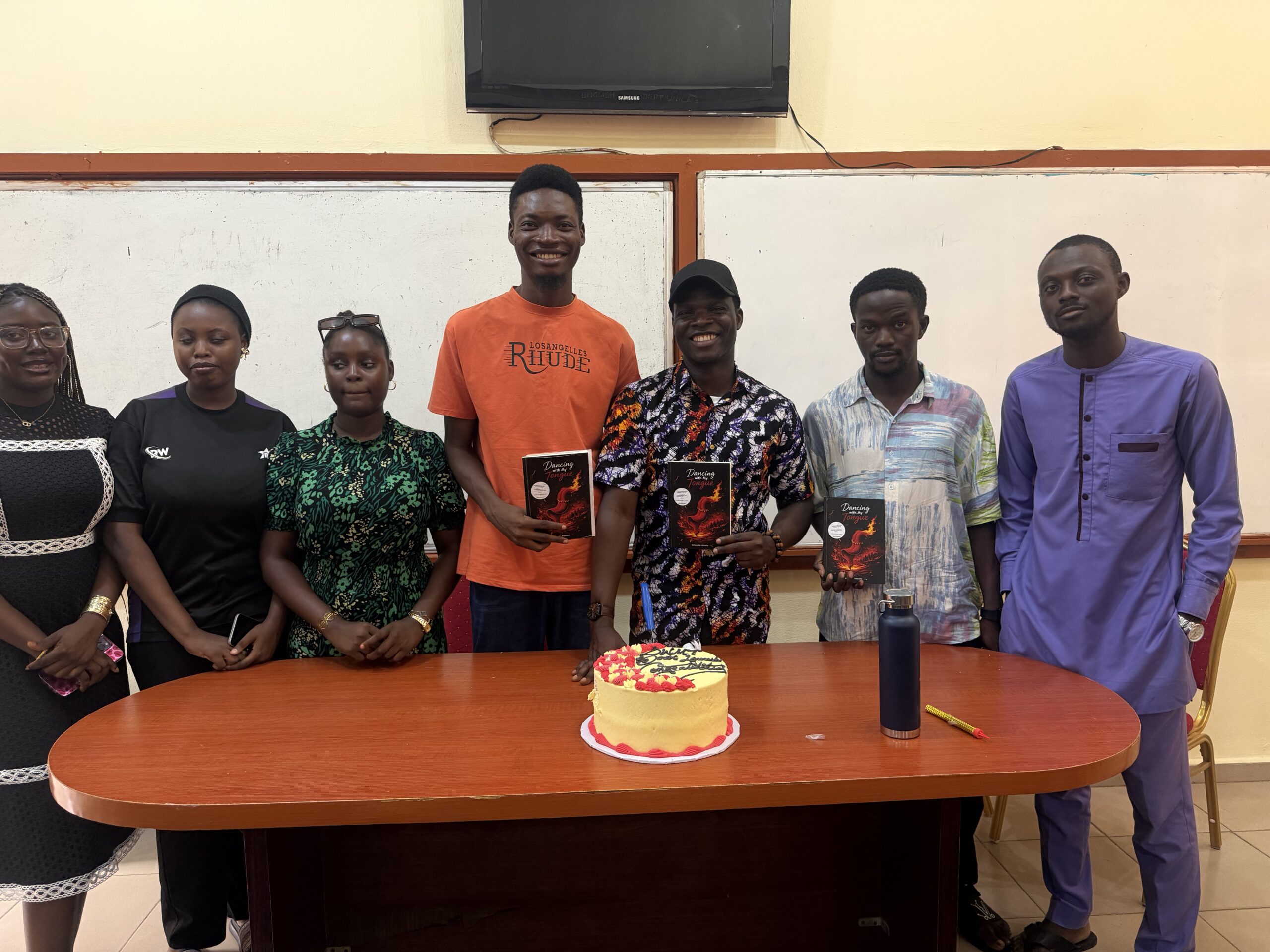
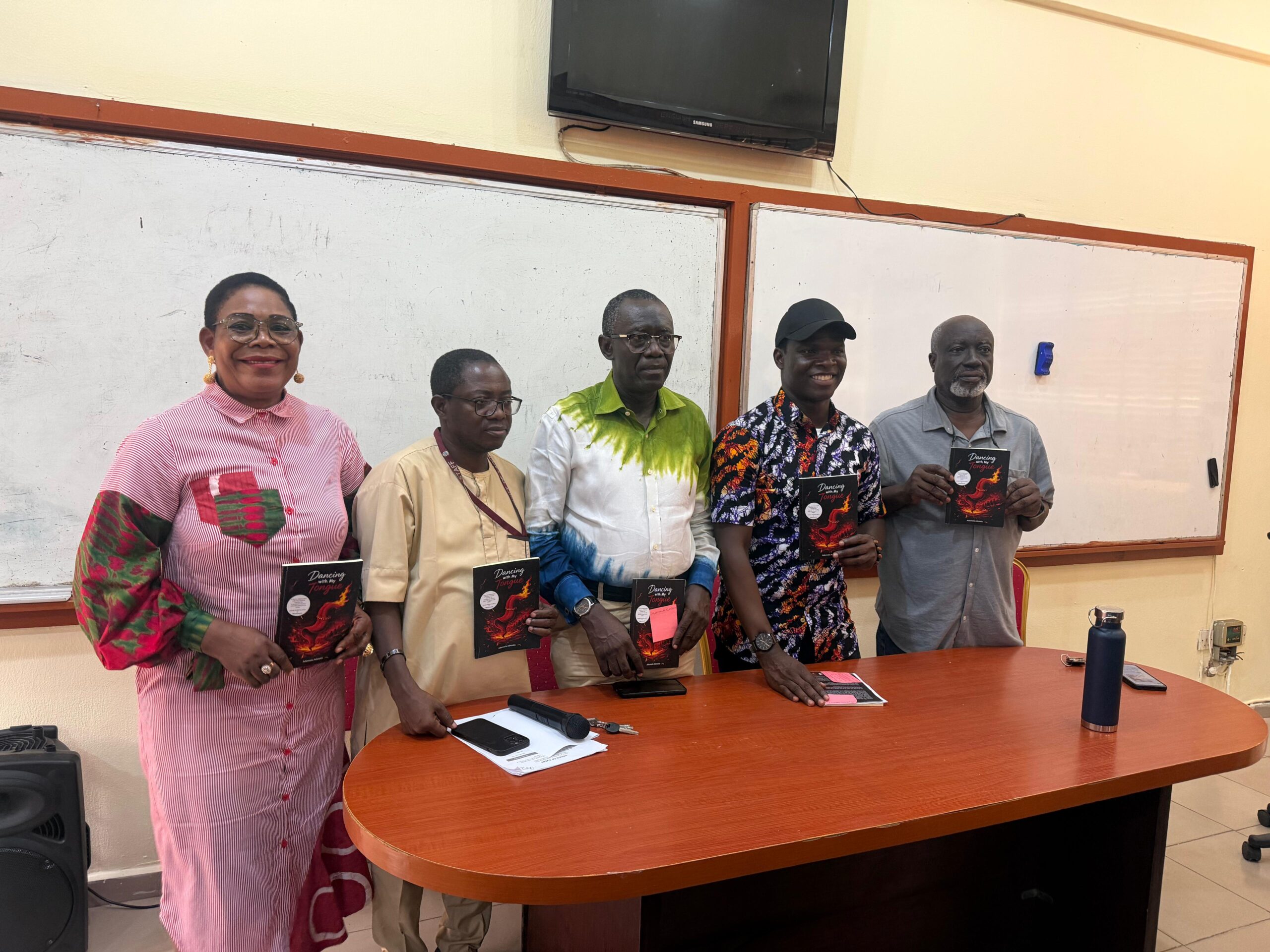
Among those in attendance were Professor Augustine Nwagbara, Head of the Department of English, UNILAG; Dr. Lola Akande, author and literary scholar; Dr. Nurayn Alimi; Dr. Kayode Kofoworola; and the author, Dr. Adesola Ademola.
Introducing the author, Awelewa highlighted Ademola’s academic and literary achievements before inviting him to address the audience.
Expressing appreciation to the organisers and guests, Ademola thanked the Department of English for hosting the event.
Speaking at the event, Ademola said the UNILAG reading was the third stop on his Nigerian book tour since arriving in the country in June.
He explained that each of the 56 poems in “Dancing with My Tongue” was inspired by a real-life experience or event, adding that he would share the story behind each piece before reading it.
“I have a couple of pieces I would read, as I have done in my prior stops.
“This would be the third university book event since I arrived in Nigeria in June.
“Each of the 56 poems that make up this book has a story behind it.
“So before I read any piece, I am going to share the story behind it,” he said.
According to him, the collection is divided into four sections: Political Ponderings; Two Razors of a Race, Balm of Belonging; Medicine for the Mind; and A Playful Seriousness.
During the reading, Ademola shared four poems, two from Political Ponderings and two from Two Razors of a Race, Balm of Belonging.
Introducing the first poem, In Gaza, the author said it was inspired by the humanitarian crisis in Gaza and reflected his concern over the suffering of civilians caught in the conflict.
He said following developments in Gaza had deeply troubled him, leading him to write the poem in the early hours of the morning.
“What I am speaking to here is a situation where Israel gives no consideration to whether you are a baby or a child or pregnant, whatever you may be.
“It just engaged in a killing spree. It is horrendous, the amount of people that have died through Israel’s gunfire.
“And as a journalist that I have been before, I still pay attention to global happenings.
“In my attention to Gaza, I have been deeply troubled.
“I can tell you that I wrote this poem at about either 2 a.m. or 3 a.m. and it was at a time I couldn’t sleep, thinking and reflecting quite very deeply about the state of Gaza,” he said.
Ademola described the poem as his personal way of documenting what he called “the ongoing atrocities in Gaza.”
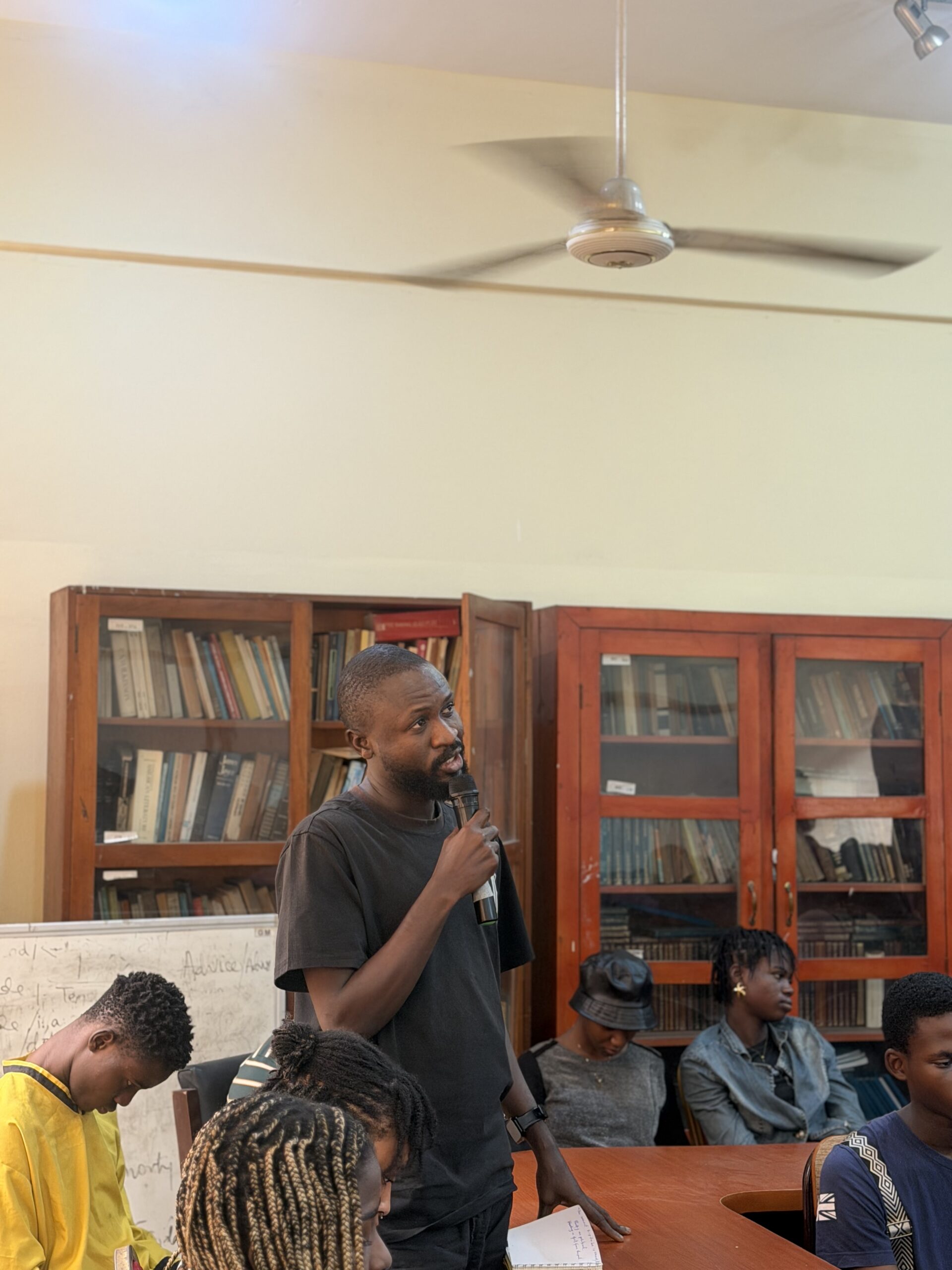
“Gaza is my inspiration for this poem and it is my own way of archiving the atrocity that went down there and that still goes on as we speak. Maybe somebody is dying through Israel’s bullet, now!” he said.
He later turned to Nigeria’s political landscape with “Just Give Them Rice,” a poem that critiques vote-buying and the use of food as a tool during election campaigns.
According to Ademola, the poem was inspired by his observations of Nigeria’s political climate.
“This poem was inspired by my attention to happenings in Nigeria,” he said.
The poet said the piece reflects how politicians exploit poverty by using food to influence voters during elections.
“One of the ways in which the political class has insulted or continues to insult Nigerians, as a collective insult, is to always bait and manipulate people with food,” he said.
He added that many of the challenges facing Nigerians are rooted in the actions of the political class.
“We cannot underestimate the extent to which the political class has made life impossible.
“What I want to point out is that the things people need, especially young people and children, the food they need to develop and grow their brains, are priced out of reach of families.
“So, the signature of campaign periods, as it is buying people’s votes, is rice,” he said.
Ademola also reflected on race and identity with “I Too Deserve to Breathe,” a poem inspired by the killing of George Floyd in the United States in 2020.
According to the poet, while Floyd’s death drew global attention, it was the response of his university in Canada that became the true inspiration for the poem.
He recalled that shortly after Floyd’s death, the university management sent an email to Black students expressing solidarity and assuring them of the institution’s support.
“I wrote this poem in 2020. Something happened in 2020, and it was one of those things that came out of the usual place.
“But this time around, it captured the attention of the world, and this was when one gentleman by the name George Floyd was quite gruesomely murdered in the U.S.
“George Floyd was callously murdered. I paid attention to the entire development of the situation.
“But it wasn’t, per se, the murder that inspired what I wrote here. Something else arose from that event,” he said.
Ademola explained that, as a doctoral researcher at the time, he received an email from his university expressing sympathy over Floyd’s death and assuring Black students that the institution stood with them.
However, he said the message prompted him to reflect on the everyday experiences of Black students on campus.
“The management of my university wrote an email. As I understood it, everyone on campus who was a Black student received it.
“The email read, ‘We are very sorry about the death of George Floyd, and we want to let you know that, as Black students on this campus, we have your back. We support you.’
“While reading the email, it struck me that if my university was all that it claimed to be in that email, I should have known that.
“It was in that frame of mind that I was saying, if I had experienced all these things the university was telling me, they wouldn’t need to write to me.
“They were writing to me because they realised that had not been the experience of Black students on campus,” he said.
According to him, that moment inspired “I Too Deserve to Breathe,” which advocates the right of every individual to live with dignity regardless of race, religion, political beliefs or sexual orientation.
“That communication triggered the production of this poem.
“In this poem, the speaker advocates the rights of anyone and everyone to be and to live, most importantly in a world that is full of anti-Black racism.
“For this poem, I am of the opinion that anyone, regardless of their political stance, sexual proclivities, ideology or religion, has a right to live and live in dignity,” he said.
The poet also explored the experiences of African immigrants in the West through “DDS (Diaspora Dislocation Syndrome),” a poem inspired by his observations of Nigerians and other African migrants abroad.
He said the poem examines what he described as an unhealthy admiration for whiteness and Western culture among many immigrants.
“The inspiration for this poem is my observation and attentiveness to how immigrants from African countries, especially Nigeria, behave abroad, particularly their disposition towards whiteness and anything white.
“I found it to be quite pathetic in my experience of it.
“It was through that attentiveness to how the average Nigerian, whether in Canada, the UK or the U.S., or anywhere in the West, behaves and regards whiteness that this poem was inspired,” he said.