

The Socio-Economic Rights and Accountability Project (SERAP) has called on the leadership of the National Assembly to investigate allegations of the diversion, misapplication, or failure to account for over ₦6.3 billion in constituency project funds.
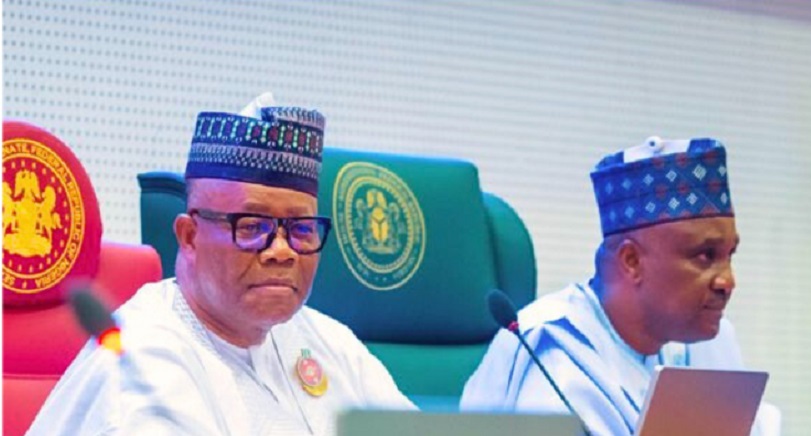
In a letter signed by its Deputy Director, Kolawole Oluwadare, SERAP urged Senate President Godswill Akpabio and Speaker of the House of Representatives Tajudeen Abbas to refer the allegations to relevant anti-corruption agencies for investigation and possible prosecution.
The statement also called for the recovery of any public funds found to have been diverted and demanded full disclosure of the names of contractors and companies, including their shareholders and beneficial owners, who received constituency project funds but failed to execute the projects.
SERAP said the allegations were contained in the Auditor-General of the Federation’s 2022 annual report, published on September 9, 2025.
According to the organisation, the reported financial irregularities represent a serious breach of public trust, the Nigerian Constitution, and international standards on accountability.
“Allegations of corruption in the spending of constituency project funds continue to undermine economic development, violate social justice, and destroy trust in political institutions,” SERAP said.
The group noted that the National Assembly has a responsibility to demonstrate leadership in tackling corruption, particularly regarding constituency projects approved by lawmakers.
The allegations involve several federal institutions, including the Environmental Health Registration Council of Nigeria (EHORECON), Federal College of Animal Health and Production Technology, Vom, Federal Polytechnic, Ukana, the National Agency for the Prohibition of Trafficking in Persons (NAPTIP), and the National Institute of Legislative and Democratic Studies (NILDS).
The Auditor-General’s report reportedly identified cases involving payments into private accounts, contracts awarded without due process, payments for unexecuted projects, undocumented spending, inflated contracts, and procurement violations.
SERAP highlighted several findings from the report, including allegations that EHORECON paid over ₦22 million into private accounts belonging to some staff members from constituency project funds without evidence of how the money was utilised.
The council was also accused of awarding consultancy contracts worth over ₦12 million for projects where the required designs and documents could not be verified.
The report further alleged that EHORECON awarded contracts worth more than ₦404 million to companies with inadequate registration records, while another ₦103 million was reportedly paid for capacity-building programmes without evidence that the activities took place.
The Federal College of Animal Health and Production Technology, Vom, was also accused of making payments exceeding ₦279 million to contractors for youth empowerment and vocational training programmes without supporting documentation.
The Auditor-General reportedly raised concerns over the payment of mobilisation fees without verified Advance Payment Guarantees and the award of contracts to companies without proper procurement documentation.
At the Federal Polytechnic, Ukana, the report alleged that over ₦407 million was paid as mobilisation fees to contractors without adequate documentation, while more than ₦399 million was reportedly paid for medical outreach, youth empowerment, and vocational training projects without proof of procurement compliance.
The Polytechnic was also accused of inflating contracts for solar power and streetlight projects by over ₦192 million and making payments for projects that were either incomplete or not executed.
SERAP further cited allegations involving NAPTIP, including irregular contracts worth millions of naira for sensitisation programmes, logistics, and solar light projects where contractors were allegedly paid but failed to deliver.
The organisation also raised concerns over NILDS’ failure to submit audited financial statements for several years and alleged unremitted stamp duty deductions.
SERAP warned that corruption in public spending has significant consequences for Nigerians, particularly vulnerable citizens who bear the burden through reduced access to quality services and development.
The group referenced constitutional and legal provisions requiring transparency, accountability, and proper management of public resources.
It urged the Senate President and House Speaker to act within seven days of receiving or publishing the letter, warning that it would pursue legal action if no steps were taken.
SERAP maintained that investigating the allegations and ensuring accountability would strengthen public confidence in democratic institutions and the fight against corruption.