

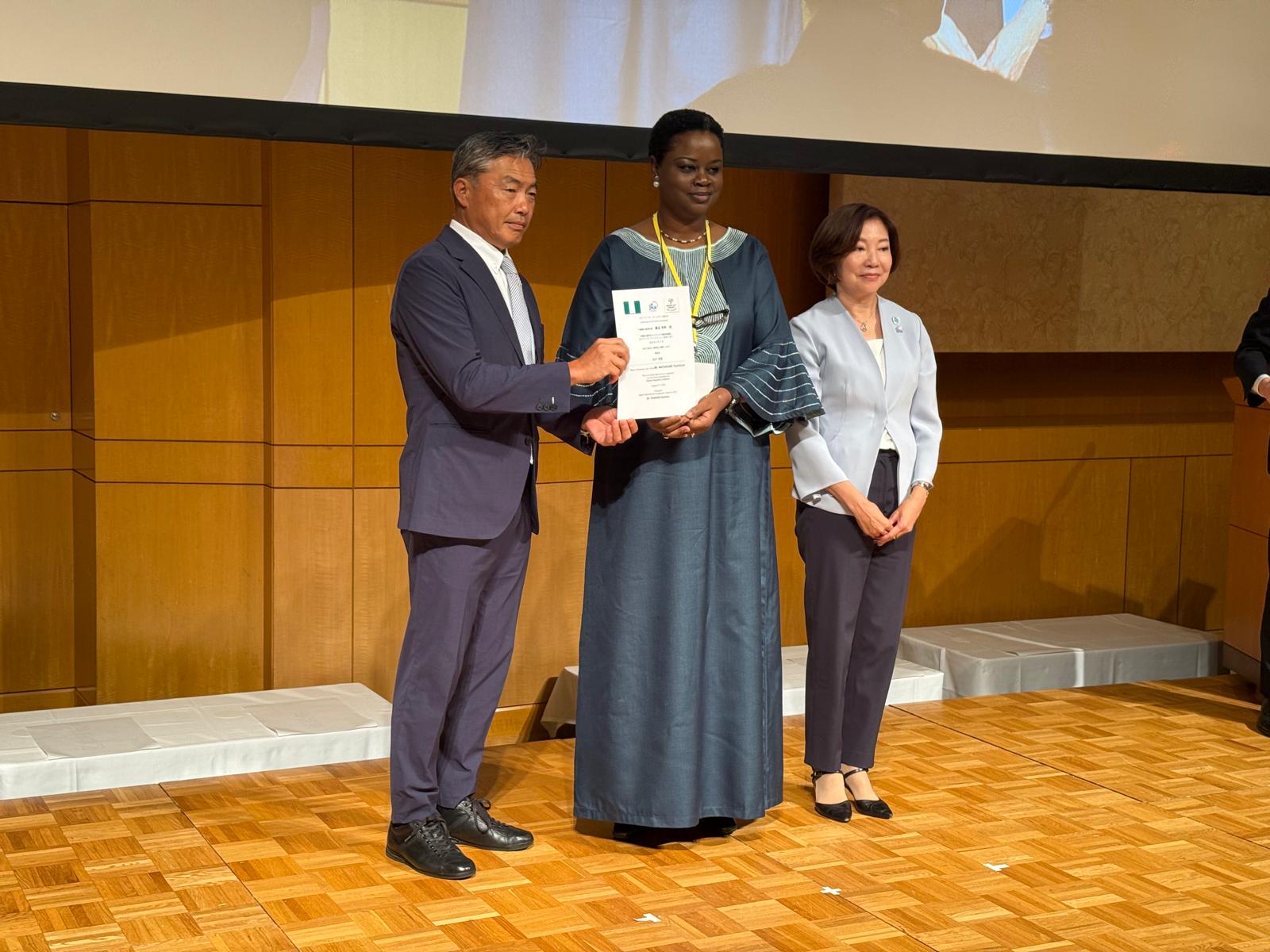
The Government of Japan has designated the city of Kisarazu in Chiba Prefecture as the official hometown for Nigerians living and working in the country, in a move aimed at strengthening cultural diplomacy, boosting economic growth, and enhancing workforce productivity.
The announcement was made on Thursday on the sidelines of the 9th Tokyo International Conference on African Development (TICAD9).
Under the new arrangement, Japan will create a special visa category for highly skilled, innovative, and talented young Nigerians who wish to relocate to Kisarazu.
The visa will also cover artisans and blue-collar workers willing to upskill and contribute to Japan’s labour force.
At the ceremony, the Japan International Cooperation Agency (JICA) also designated other African hometowns: Nagai in Yamagata Prefecture for Tanzania, Sanjo in Niigata Prefecture for Ghana, and Imabari in Ehime Prefecture for Mozambique.
The initiative seeks to deepen bilateral exchanges by linking municipalities with African nations that already share cultural or economic ties.
Nigeria’s Chargé d’Affaires and Acting Ambassador to Japan, Mrs. Florence Akinyemi Adeseke, together with Yoshikuni Watanabe, Mayor of Kisarazu, received the certificate confirming the designation.
The four cities will foster a foundation for two-way exchanges for manpower development that will add value to the economic growth of Japan, Nigeria, and the other three African nations.
Local authorities hope that the designations will increase the population of their cities, contributing to their regional revitalisation efforts.
Kisarazu was the official host town of the Nigerian contingent for the 2020 Tokyo Olympics. The team conducted their pre-games training camps and acclimatisation in the city before moving to the Olympic village, in the COVID-19 delayed Olympic Games.
In his opening address at the TICAD9, where he announced $5.5 billion in New investment in Africa, Japanese Prime Minister, Shigeru Ishiba, emphasised the importance of mutual understanding, local solutions, and collaborative efforts for Africa’s development. The Prime Minister outlined Japan’s focus on private sector-led sustainable growth, youth and women empowerment, and regional integration.
Prime Minister Ishiba acknowledged the challenges of Japan’s ageing population but emphasised that locally rooted solutions are essential for Africa’s development.
“Japan is providing various cooperation and support for Africa. But first of all, Japan needs to know more about Africa. So, in creating solutions together, this co-creation at the TICAD 9, we focus on three important areas: private sector-led sustainable growth, Youth and Women, and Regional integration and connectivity within and beyond Africa”.
He appealed to African countries to assist Japan as it grapples with the challenges of a declining population and shrinking agricultural land.