

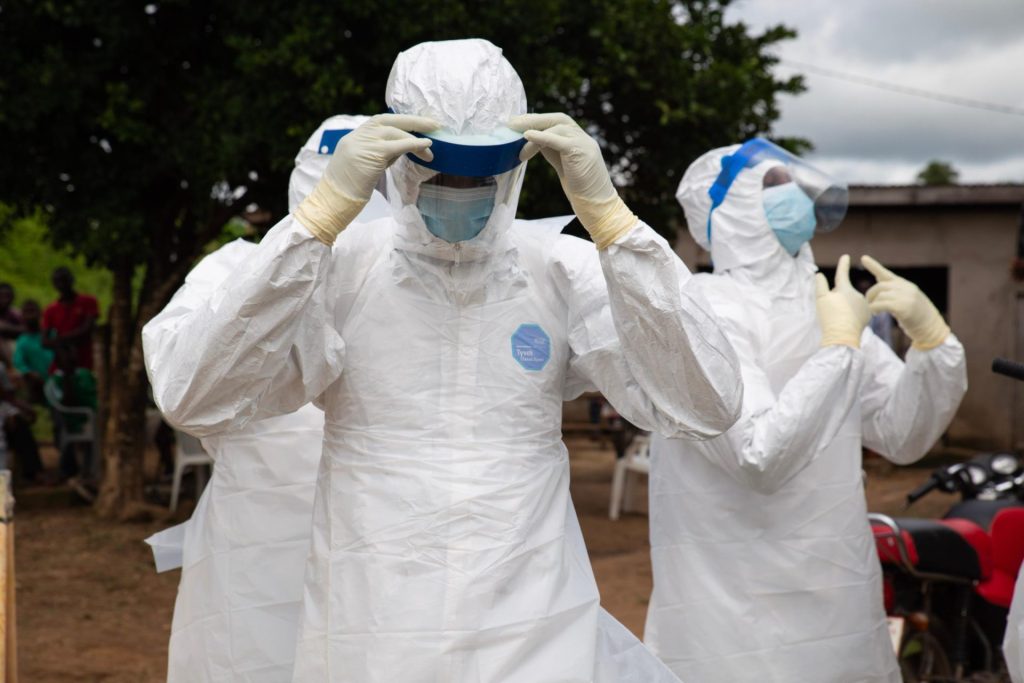
The United Nations (UN), has warned that the Ebola outbreak in the Democratic Republic of the Congo is spreading faster than efforts to contain it, as reported deaths approach 3,000.
UN Emergency Relief Coordinator, Tom Fletcher, said on Monday that although humanitarian agencies and Congolese authorities had significantly scaled up their response, the virus was still moving faster than containment efforts.
“The response is growing and has been scaled up, but the virus is moving faster,” Fletcher said.
“And unless we scale up urgently, more lives will be lost and the threat will grow.”
DRC authorities reported more than 6,100 confirmed Ebola cases and 2,950 deaths as of Monday, with more than 5,000 infections recorded in Ituri Province.
The outbreak, identified as a Bundibugyo Ebola outbreak, was declared in the DRC on May 15 and has spread at a rapid pace, raising concerns about further transmission.
Ebola is transmitted through direct contact with the blood or bodily fluids of an infected person or contaminated materials. Early detection, isolation, contact tracing and appropriate treatment are therefore critical to breaking transmission chains.
Fletcher said containing the outbreak would require sustained political commitment, unrestricted humanitarian access and increased international funding.
“We have the experience, the tools and extraordinary people risking their lives to stop this epidemic. What we need now is political will, access and resources,” he said.
The UN relief chief urged governments to ensure humanitarian workers can reach affected communities, particularly in areas where insecurity and poor infrastructure are hampering the response.
He also called on the international community to maintain Ebola as a global health priority to prevent further spread.
Humanitarian agencies are facing a funding shortfall of about $1.1bn, which is limiting efforts to expand disease surveillance, treatment, community mobilisation and cross-border preparedness.
Fletcher said the UN had allocated more than $57m from the Central Emergency Response Fund to support response and preparedness efforts in the DRC and neighbouring countries.
He said closing the funding gap and containing the outbreak would depend on governments and international partners matching existing technical capacity with sufficient resources and political commitment.
The UN said the tools needed to control Ebola are already available but warned that delayed funding, restricted humanitarian access and poor coordination could allow transmission to outpace the response.
The warning comes after the World Health Organisation declared Uganda’s latest Ebola outbreak over following measures including rapid detection, contact tracing, isolation, clinical care, infection prevention and strengthened surveillance.
“We have beaten Ebola before, and we can do it again,” Fletcher said.
Meanwhile, the UN International Organization for Migration has conducted nearly 23 million health screenings in the DRC and neighbouring countries.
UN spokesperson Stéphane Dujarric said the screenings were helping authorities monitor population movements, identify possible cases and reduce the risk of cross-border transmission.
The UN has continued to urge governments and international partners to increase funding and humanitarian access as authorities work to bring the Ebola outbreak under control.