

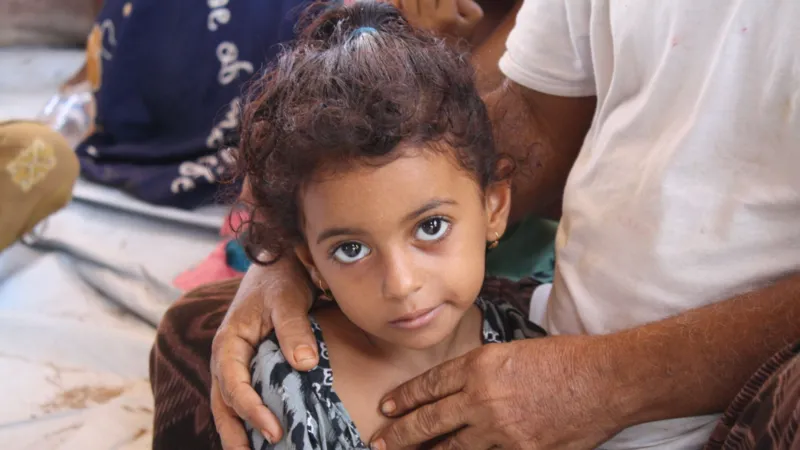
Ibrahim Issa, 50, is from the Yemeni coastal town of Dhubab, right on the front lines of the war between Yemen’s Houthis and the Saudi-backed pro-government forces fighting them.
Today he sits, surrounded by his family, on a tarpaulin spread over a sandy floor inside a vast open-sided warehouse at Markazi camp in Obock, northern Djibouti, packed with Yemeni families who have fled by boat across the narrow Bab al-Mandab Strait.
After their sea crossing, Yemeni refugees have made their way by truck and on foot to this camp, jointly administered by the government and the UN.
“How could I just sit there when my kids are screaming and shaking in terror?” says Ibrahim Issa. “When the sound of the planes starts, and the kids hear the planes, they begin shouting and screaming. As parents it is our responsibility, what can you do when you see this? That is why we fled, to save them.”

As a fisherman, Ibrahim Issa already owned a boat large enough to bring out his family from Yemen.
He even brought several of the family’s goats which I can now see nibbling at scraps nearby, foraging amidst the discarded canisters of cooking gas and empty plastic bottles. Some families have been able to bring small bundles of possessions with them from Yemen – one family has even brought a “jeraak”, a tall metal shisha pipe – but others have arrived, exhausted, in just the clothes they left in.


