

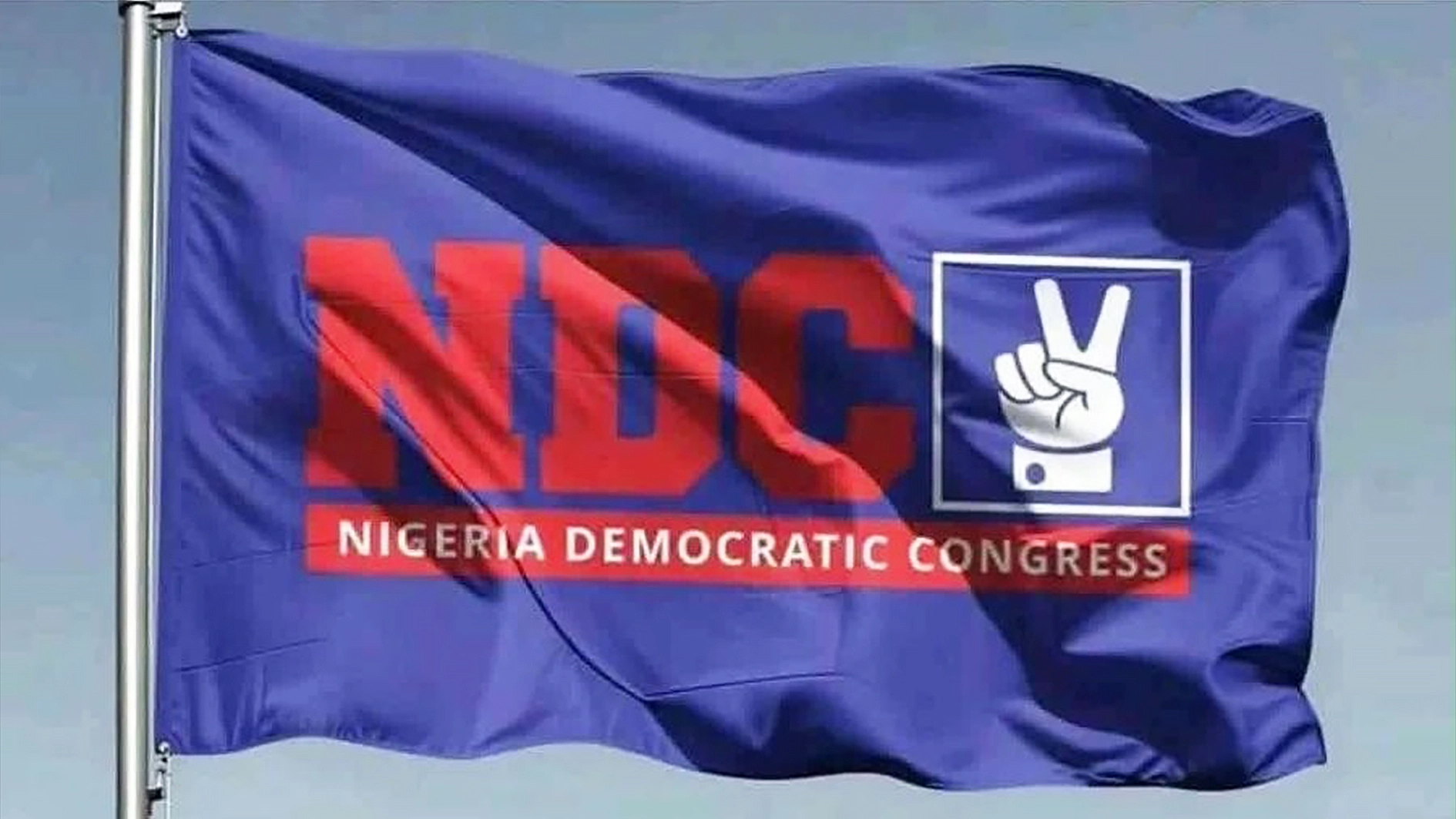
The Federal High Court in Abuja has dismissed a suit filed by the Nigeria Democratic Congress seeking to nullify Sections 138 and 77(5) of the Electoral Act 2026, ruling that the challenged provisions are consistent with the 1999 Constitution.
Delivering judgment on Tuesday, Justice Mohammed Umar held that the suit lacked merit and upheld the preliminary objections filed by the defendants.
The NDC, which was registered by the Independent National Electoral Commission on February 5, had instituted the suit marked FHC/ABJ/CS/635/2026, arguing that the two sections of the Electoral Act were inconsistent with provisions of the Constitution.
The party had sued the Attorney-General of the Federation, the Clerk of the National Assembly, the President of the Senate, Godswill Akpabio, and INEC.
In his judgment, Justice Umar held that the disputed provisions of the Electoral Act complemented, rather than conflicted with, the Constitution.
He also ruled that the case was not a pre-election matter, despite the NDC attaching INEC’s election timetable to its originating summons.
“The plaintiff is invoking the interpretative jurisdiction of this honourable court in respect of the provisions of the Electoral Act 2026 on the one hand and the 1999 Constitution on the other hand,” the judge said.
He added that attaching the election timetable to the suit did not bring it within the scope of Section 285 of the Constitution.
“The fact that the defendant’s timetable is attached cannot make the case within the contemplation of Section 285,” he held.
Justice Umar also upheld the objection raised by the Clerk of the National Assembly, ruling that the NDC failed to serve the mandatory pre-action notice before commencing the suit.
He consequently struck out the action against the Clerk of the National Assembly for being incompetent.
On the substantive issues, the court rejected the party’s argument that Section 138 of the Electoral Act was inconsistent with constitutional provisions relating to the qualification and disqualification of candidates for elective offices.
Justice Umar held that while the Constitution outlines qualifications and disqualifications for elective positions, the Electoral Act merely provides the procedure and timeline for resolving disputes arising from party primaries.
“Any aggrieved party who intends to challenge any candidate that emerged at the primary election of a political party on grounds of disqualification must do so at the pre-election level,” he said.
The judge concluded that Section 138 did not conflict with the Constitution.
“The provision of Section 138 of the Electoral Act 2026 complements the provision of the Constitution, but is not in conflict with it. The contention of the plaintiff that Section 138 is inconsistent with the Constitution is of no merit,” he ruled.
Justice Umar also declined to invalidate Section 77(5) of the Electoral Act, noting that the issue had already been settled by the Court of Appeal.
According to him, the appellate court had previously pronounced on the provision, and lower courts were bound by the doctrine of judicial precedent.
The NDC had urged the court to strike down Section 138 and direct the National Assembly to amend the Electoral Act to restore “qualification” as a ground for challenging the return of elected candidates.
It also sought the nullification of Section 77(5), arguing that it infringed on constitutional provisions relating to freedom of association and political participation.
However, the Attorney-General of the Federation, INEC, the Clerk of the National Assembly and Senate President Godswill Akpabio all opposed the suit, maintaining that the Electoral Act was validly enacted and consistent with the Constitution.
The respondents argued that the law strengthened, rather than contradicted, constitutional provisions governing elections and political parties.
In dismissing the suit, the court affirmed the validity of the challenged provisions of the Electoral Act 2026.