

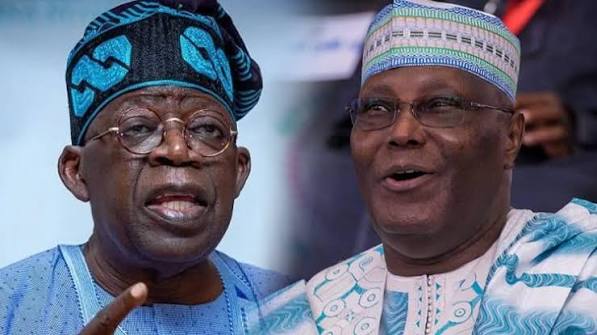
The African Democratic Congress (ADC) presidential candidate Atiku Abubakar has challenged President Bola Tinubu to disclose the identities of government officials linked to the controversial Presidential Foreign Investment Promotion Council (PFIPC).
Atiku made the demand after an interim report by the Independent Corrupt Practices and Other Related Offences Commission (ICPC), which he argued did not clear the Presidency of wrongdoing.
In a statement issued on Friday by his Senior Special Assistant on Public Communication, Phrank Shaibu, the former Vice President said the report’s findings of negligence and connivance within government processes had raised more questions about how a supposed impostor was able to operate within official circles.
He questioned how the Director General of the fake agency, Mr Adeniyi Adeyemi Matthew, gained access to government facilities and official instruments, secured recognition within government and opened bank accounts in the names of fictitious agencies.
“If there was connivance, who connived? If public officers were negligent, who are they? Who granted access to government offices? Who recognised this supposed director-general? Who enabled him to operate within the machinery of government?”
He argued that the reported findings made it difficult to portray the controversy as the work of an isolated fraudster, insisting that such activities would have required failures or assistance from individuals within the government system.
NPO Reports recalls that the allegations against Adeyemi include forging a presidential appointment letter, creating a fictitious federal agency, using offices and instruments previously associated with the Presidential Economic Advisory Council and opening bank accounts through forged legislative documents.
Adeyemi had also alleged that the sum of ₦400 million was paid to the President’s Chief of Staff, Femi Gbajabiamila, through an intermediary, while an additional ₦200 million was demanded to facilitate presidential approvals.
In his statement on oath, the Chief of Staff dismissed allegations linking him to the death of Babatunde Tanimola, whom Adeyemi claimed acted as an intermediary, as well as claims that he was involved in an alleged assassination attempt on the suspended non-existent agency’s director general or influenced investigations by security agencies.
Subsequently, Gbajabiamila filed a N15 billion defamation suit against Adeyemi over the allegations.
Atiku said the recommendation for sanctions against public officers whose alleged negligence facilitated the operation further demonstrated the need for the identities and roles of those officials to be made public.
“A fake agency does not walk into government offices by itself. A forged appointment letter does not validate itself. Bank accounts do not open themselves,” he said.
He accused the Presidency of attempting to rely on the interim nature of the ICPC report to shield officials whose actions may have enabled the alleged fraud.
He maintained that an interim report could not be treated as a final declaration that the Presidency had been cleared, particularly as investigations into the collaborators and related bank accounts are ongoing.
The ADC presidential candidate therefore renewed his call for an independent panel of inquiry to conduct a comprehensive investigation into the PFIPC affair.
Atiku also urged the National Assembly to conduct a public hearing into the controversy and broadcast the proceedings live.
His demand followed an invitation reportedly extended to Adeyemi to appear before a National Assembly investigative panel.
According to Atiku, Adeyemi’s reported willingness to appear before lawmakers provided an opportunity for the government to demonstrate its commitment to transparency by allowing witnesses to testify publicly and under oath.
“The National Assembly should immediately institute an open, live-broadcast public hearing into this scandal,” he said.
He further urged the Presidency not to obstruct the investigation or protect anyone connected with the matter.
Atiku warned that anything short of an open hearing could deepen public suspicion that influential individuals were being shielded.