

- Safiu Kehinde
President Bola Tinubu has announced that Nigeria is experiencing unprecedented growth in non-oil revenues, driven by reforms targeting fiscal stability, compliance, and digital tax administration.
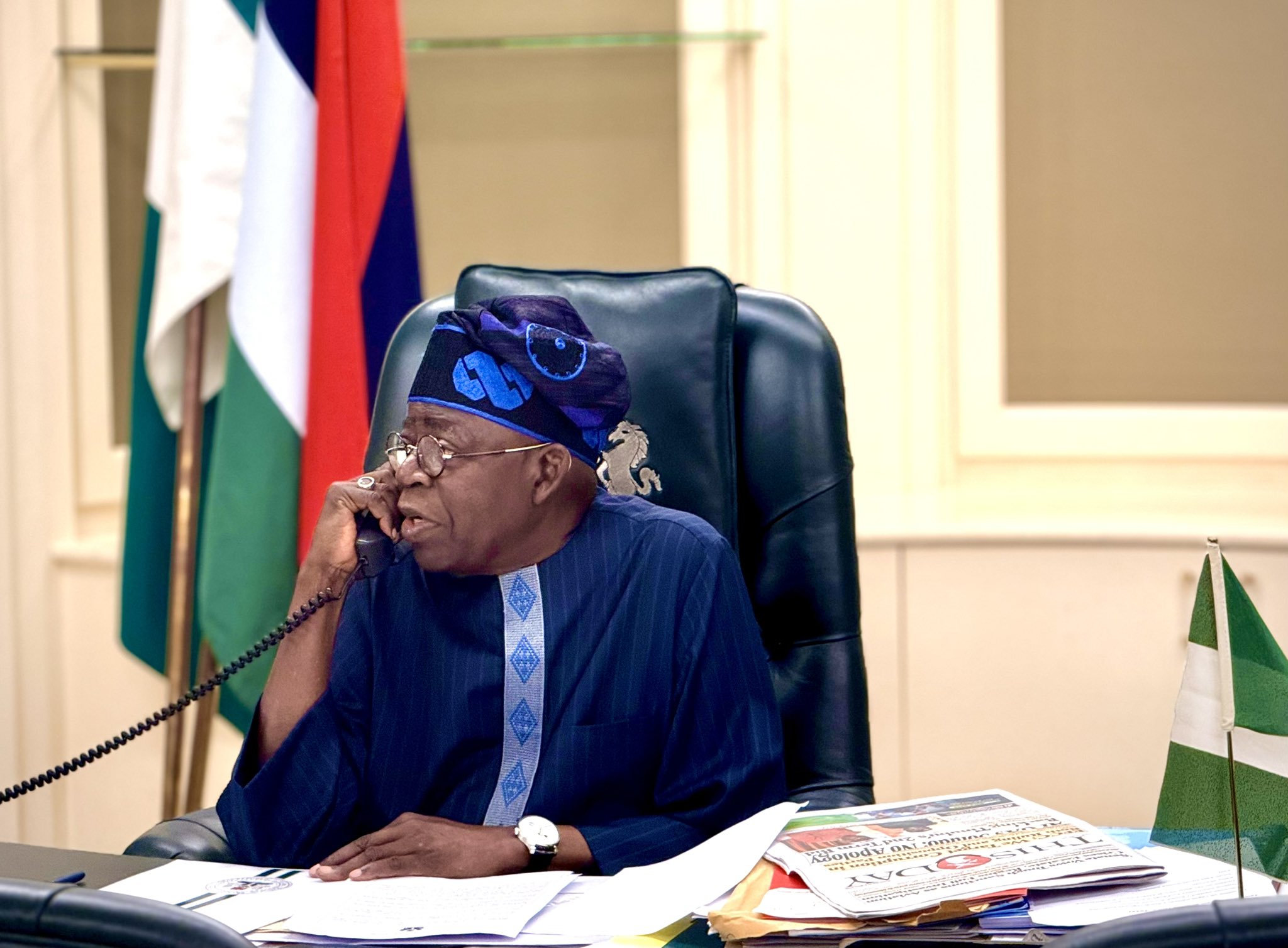
Tinubu made the announcement while highlighting the country’s revenue growth to a delegation from the Buhari Organisation on Tuesday.
As quoted in a statement issued on Wednesday by his Special Adviser on Information and Strategy, Bayo Onanuga, the President cited significant increases in non-oil revenues for all tiers of government between January and August 2025.
Total collections, according to him, reached ₦20.59 trillion, representing a 40.5 per cent rise from ₦14.6 trillion recorded during the same period in 2024.
The President revealed that the ₦20.59 trillion was mobilised in eight months, marking the highest collection in recent history.
He maintained that the performance aligns with projections and keeps government on track to achieve its annual non-oil revenue target.
Tinubu added that the Federal Government has ceased borrowing from local banks since early 2025, underscoring improved fiscal discipline.
He noted that while non-oil tax revenues are rising, oil-based revenues remain under pressure due to declining crude oil prices.
The President emphasised that higher revenues have enabled record disbursements to states and local governments, supporting grassroots development.
For the first time ever, monthly FAAC allocations exceeded ₦2 trillion in July 2025, enabling investment in agriculture, infrastructure, and essential public services.
Still, the President admitted that revenue growth alone is insufficient to meet ambitious goals for education, healthcare, and infrastructure.
Tinubu stressed that oil is no longer the main engine of national revenue, signalling a historic shift in Nigeria’s fiscal landscape.
“Nigeria’s fiscal foundations are being reshaped. For the first time in decades, oil is no longer the dominant driver of government revenue.
“The combination of reforms, compliance, and digitisation powers a more resilient economy.
“The task ahead is ensuring these gains improve citizens’ lives through better schools, hospitals, and jobs,
“With ₦15.69 trillion collected, non-oil revenues now account for three of every four naira, showing a decisive shift from oil dependence.
“While inflation and FX revaluation contributed, the uplift is mainly reform-driven — digitised filings, Customs automation, stricter enforcement, and broadened compliance.
“₦3.68 trillion was collected in H1, ₦390 billion above target, already 56 per cent of the full-year goal. This reflects systemic reforms, not mere windfalls,” he said.
Tinubu also confirmed that FAAC allocations to states had increased, empowering subnationals to drive local development.
“FAAC allocations reached ₦2 trillion in July for the first time, giving states resources to strengthen grassroots development.
“The government affirms collections are ahead of expectations, with final validation to be published by the Budget Office at year’s end,” he said.
He reiterated that Nigeria’s revenue base is expanding, and reforms are producing tangible results.
“The priority is translating numbers into real relief — putting food on the table, creating jobs, and investing in roads, schools, and hospitals,” he said.