

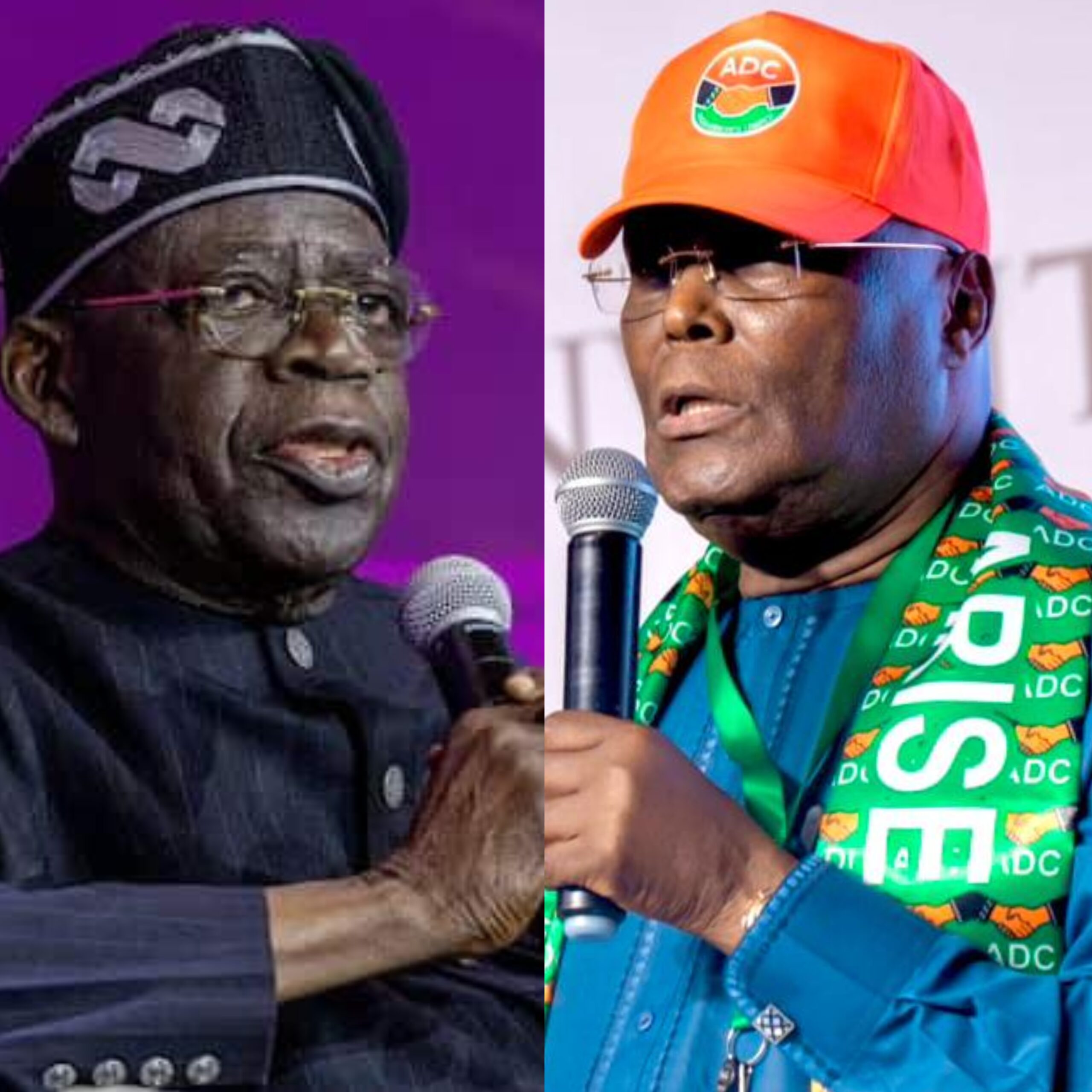
- Safiu Kehinde
The Presidency has slammed the African Democratic Congress (ADC) Presidential candidste for the 2027 General Election, Atiku Abubakar, over his disclosure of plan to restore subsidy if elected President.
NPO Reported that Atiku had in a clip from a recent interview shared on X on Thursday vowed to restore subsidy as he labelled its removal by President Bola Tinubu a failure.
The former Vice President claimed that the removal of the susbsidy failed to make any positive impact on the welfare of Nigerians.
Reacting in a statement issued on Thursday evening, the Special Adviser to the President on Information and Strategy, Bayo Onanuga, slammed Atiku.
Onanuga described his plan as a show of desperation for power.
He reminded the ex-Vice President of his previous campaign promise to remove subsidy.
“Atiku Abubakar behaved like a man from an archaic past who least comprehends the present economic dynamics and suggested that he would restore the much-abused, wasteful, pillaged, corruption-ridden fuel subsidy regime, which the Petroleum Industry Act made illegal from the end of June, 2023.
“Even though he used to believe that the subsidy regime must be eliminated, a point he canvassed in the run-up to his defeat in the 2023 election, he has now opportunistically recanted the major plank of his economic doctrine and turned a renegade.
“It is not difficult to explain why Atiku has latched onto the abandoned subsidy regime, five months to the election.
“Desperate for power, he needed to make a promise that he knew, if he were candid with our people, does not make fiscal sense, is retrogressive, and is against the genuine interest of the people.” Onanuga wrote.
While acknowledging Atiku’s right to propose alternative policies, the presidential aide however maintained that Nigerians also deserve to understand what the proposed restoration of subsidy would actually mean, how it would be funded, and whether it is compatible with the legal and structural changes that have taken place in the petroleum sector.
Onanuga started by explaining what subsidy implies and how it works.
“First, we must clear some ambiguities about the so-called subsidy. It is not some money sitting in the treasury to be disbursed to offer cheap fuel to Nigerians.
“It is the massive discount the NNPC offered the Nigerian government: selling fuel it bought at N100 at N50 at the pump, leading to under-recovery of costs and massive losses.
“Somewhere in the NNPC books are still trillions of Naira in subsidy costs that the Nigerian government has not paid.” He said.
Onanuga thereafter refuted Atiku’s claim about a N30 trillion subsidy savings unaccounted for.
“Contrary to Atiku’s claim in his interview, no N30 trillion subsidy windfall or savings exists anywhere except in his imagination.
“The petrol subsidy regime that Nigerians knew before May 2023 was dismantled as part of the country’s petroleum-sector reforms.
“The Petroleum Industry Act established a new framework for the downstream petroleum market. It removed the subsidy, as was previously done for diesel, kerosene and aviation fuel, ending a system that had placed a substantial and often unpredictable burden on public finances.
“The PIA scheduled the subsidy removal by the end of June 2023. President Tinubu only accelerated it by weeks to stop further bleeding before the due date.” He said.
The presidential aide noted that restoring the old arrangement of subsidy cannot simply be presented as a matter of announcing that government will once again pay part of the cost of petrol.
According to him, it would require a clear legal, fiscal and administrative framework, including identifying the source of the funds and determining how such a policy would be implemented under the present petroleum-market structure.
Onanuga also emphasised that Nigeria’s petroleum landscape has since changed with the emergence of substantial domestic refining capacity.
“More importantly, Nigeria’s petroleum landscape has changed significantly since May 2023. For many years, the country relied heavily on imported petrol, with the government bearing the consequences of the gap between the regulated pump price and the cost of supplying the product.
“Today, the emergence of substantial domestic refining capacity has fundamentally altered that equation.
“The Dangote Refinery has become a major source of locally refined petrol. Indeed, the Dangote Refinery would not have kickstarted production for local consumption were the subsidy regime operative. This is an important point that Atiku deceptively ignored.” The presidential aide said.
He maintained that Atiku’s proposal portends a reversal of current local production.
This, according to Onanuga, will spell bankruptcy for smaller local refineries like Aradel’s, causing attendant job losses and a loss of foreign exchange.
The spokesperson also desrcibed the new development under Tinubu as a sharp contrast to when Obasanjo and Atiku were in power.
“Nigeria’s largest import, costing about $10 billion, was refined products!. President Tinubu has flipped that to Nigeria’s advantage.
“The N15 trillion that would have been borrowed and spent on selling discounted petrol has now significantly gone into the coffers of the three tiers of government.
“Now all states are fiscally stable and can pay salaries regularly and embark on infrastructure projects.
“In July, the three tiers shared about N3 trillion, a record, from the federation account. That is a major achievement, since the abolition of petrol price discount and distortions in the foreign exchange regime.” He said.
Onanuga held that Nigeria is increasingly moving from a model in which scarce foreign exchange is used to import refined petrol to one in which crude oil, largely sold in Naira, can be processed domestically and supplied to the Nigerian market.
That transition, he maintained, creates opportunities for greater energy security, foreign-exchange conservation, industrial development and ultimately a boost to employment generation.
“The subsidy debate must therefore be grounded in the realities of today’s market rather than treated as though Nigeria’s petroleum sector has remained unchanged.
“The former petrol price discount arrangement was not simply government handing out a harmless discount. It involved the public sector absorbing the difference between regulated prices and the actual cost of supplying petrol, with substantial fiscal consequences.” Onanuga said.
The presidential aide charged Nigerians to ask Atiku who will pay for the cost if subsidy is restored.
He held that it will end up falling on the public through reduced funds for infrastructure and social services, reduced allocation to states and 774 local councils amongst others.
“In practical terms, therefore, Nigerians should ask a straightforward question: If the subsidy is restored, who pays for it? What will the new pump price be? N200 or N500? If petrol is sold below its economic cost, which is about N1,200 to N1,300, someone must absorb the difference.
“Ultimately, that cost falls on the public finances—through reduced funds for infrastructure and social services, reduced allocation to states and 774 local councils, increased borrowing, higher public debt, or some combination of these.
“We believe sustainable relief is different from recreating a fiscal arrangement that will again cripple our country.” He said.
Onanuga charged Atiku to be ore calculative with his propositions and promises as he reiterated that Nigeria cannot afford to return to the subsidy regime.
“Political promises must be backed by fiscal arithmetic. Alhaji Atiku Abubakar is entitled to propose a different economic direction. Specific answers should accompany any promise to restore fuel subsidy.
“How much will the programme cost annually? What revenue source will finance it? Will the government borrow to fund it? Will the National Assembly be asked to amend existing PIA legislation and petroleum-sector rules? How will subsidy payments be verified and protected from abuse, as witnessed some years ago?
“And, now that Nigeria has substantially increased domestic petrol production, what precisely would the proposed subsidy be subsidising—the cost of local production, transportation and distribution, or some other component of the petroleum value chain?
“Nigeria cannot afford to return to policies whose costs are hidden from citizens until they appear later as debt, reduced government spending on social services, and further pressure on the national currency.” He said.
Onanuga added that thr country should welcome robust debate about the cost of living and the direction of economic policy.
However, the debate, he said, must be anchored in Nigeria’s reality today, not yesterday’s petroleum economy.
“We urge all political actors, including Alhaji Atiku Abubakar, to present Nigerians with the full fiscal and legal implications of any proposal to restore fuel subsidy.” Onanuga said.