

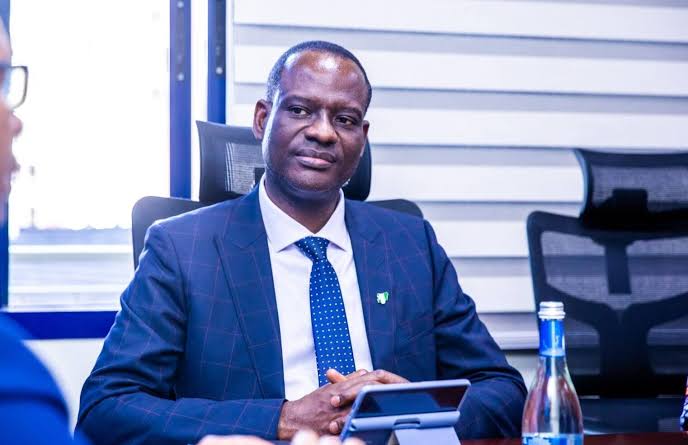
The Minister of Finance and Coordinating Minister of the Economy, Taiwo Oyedele, has urged state governments to strengthen their Internally Generated Revenue (IGR) and reduce their dependence on federal allocations.
Oyedele made the call on Wednesday in Owerri, Imo State, while speaking at the ongoing 2026 National Council on Finance and Economic Development Retreat.
At the retreat themed, “Strengthening Fiscal Federalism for Equity, Sustainable Development and Economic Resilience in a Volatile Global Economy,” the minister called for stronger fiscal federalism, improved revenue generation and economic diversification to make Nigeria more resilient to economic shocks.
He said the retreat should critically examine the country’s existing allocation and derivation principles while promoting fiscal responsibility, accountability and cooperation among the federal, state and local governments.
“Nigeria must move from an allocation-dependent economy to one driven by production, investment and job creation,” Oyedele said.
According to him, recent economic reforms, including the removal of fuel subsidy and the unification of the foreign exchange market, have significantly increased revenues available for distribution through the Federation Account.
He said monthly Federation Account allocations, which averaged between N300 billion and N600 billion before 2023, now exceed N2 trillion.
Oyedele cited June 2026 as an example, when the Federation Account Allocation Committee distributed N2.8 trillion to the federal, state and local governments.
However, he cautioned that increased allocations alone could not guarantee development.
He said additional revenue must translate into improved infrastructure, human capital development, productivity and public services.
Oyedele urged state governments to improve their IGR, attract investments and create jobs rather than rely heavily on federal allocations.
He also called for prudent borrowing and greater transparency in public finance, warning governments against accumulating liabilities without credible repayment plans.
The minister urged participants at the retreat to promote an evidence-based approach to fiscal policy and ensure that fiscal federalism evolves in line with Nigeria’s changing economic realities.
The Imo State Governor, Hope Uzodimma, represented by his deputy, Chinyere Ekomaru, said states must be empowered to generate more revenue and effectively manage available resources.
Uzodimma said continued dependence on oil revenue was no longer sustainable and noted that his administration had digitised revenue collection, blocked leakages and increased the state’s IGR.
He added that Imo had invested in agriculture, the digital economy, tourism, power, education, small and medium-sized enterprises and infrastructure to create jobs and expand opportunities for its growing youth population.
The governor urged participants to develop practical measures to deepen fiscal autonomy, improve revenue generation and promote equity among Nigeria’s federating units.
Other participants included the Chairman of the Revenue Mobilisation, Allocation and Fiscal Commission, Mohammed Shehu; Accountant-General of the Federation, Shamsudeen Ogunjimi; Chairman of the Forum of State Commissioners for Finance of Nigeria, Akintunde Oyebode; and Executive Chairman of the Nigeria Revenue Service, Zacch Adedeji, among others.