

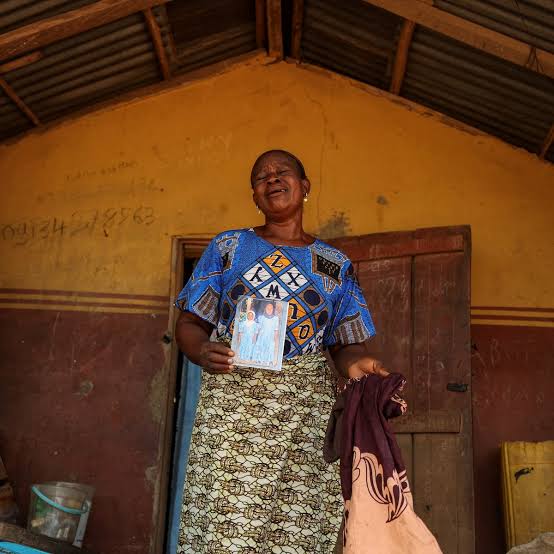
On May 15, 2026, the morning began like any other in parts of Oriire Local Government Area, Oyo State.
Children prepared for school, teachers ready for the classrooms and parents up and about with their daily routines, trusting that their communities remained safe enough for ordinary life.
By the end of the day, that trust had been shattered.
The brazen attacks targeted the Baptist Nursery and Primary School (Yawota), Community Grammar School (Esiele), and L.A. Primary School (Ahoro-Esinele).
Forty-six people, including seven teachers and 39 pupils were abducted by bandits who invaded the area in the attacks that have left their families counting days, weeks.
Among those abducted was a two-year-old pupil, Christianah Akanbi.
The initial shock of the incident may have faded from headlines, but for the families of those still in captivity, time has not moved normally.
Each passing day has only deepened the uncertainties.
 As families searched for hope, the abductors introduced a layer of cruelty; releasing videos of some of the captives pleading with the government to secure their release.
Days after the abduction, one of the kidnapped teachers, Michael Oyedokun, a Mathematics teacher at Community High School, Ahoro-Esinele was brutally and painfully slaughtered by his captors.
In another video shared online, Mrs. Rachael Alamu, the principal of Community High School, Ahoro-Esinele, appealed to the Federal Government to intervene and secure their release.
 One of the biggest questions surrounding the Oriire abduction is whether the attack could have been prevented.
The Aare Ona Kakanfo of Yorubaland, Gani Adams, had previously raised concerns about growing insecurity in the South-West, warning that criminal elements had infiltrated parts of the region, including Oyo State.
If the attackers do not maintain organised bases within the region, how have they managed to hold several pupils, students, and teachers for up to 50 days?
That also begs the question of where the victims are being held. How are they able to move supplies, maintain communication, and sustain themselves in difficult terrain?
A criminal operation of this scale requires more than weapons and manpower.
The ability of the abductors to survive for weeks raises concerns about the networks that may support criminal activities, from movement routes and information channels to food supplies, medical needs, and other necessities.
As pressure mounted, the Federal Government announced new measures aimed at improving rescue efforts and strengthening security around affected communities.
President Bola Tinubu approved the recruitment of 1,000 forest guards and directed the deployment of a specialised security unit equipped with rescue capabilities to support efforts to secure the victims’ release.
However, the response attracted criticism from Nigerians who questioned why major interventions appeared after weeks of captivity.
There are also allegations over political undertones. When the Presidency sent a delegation led by the Chief of Staff, Femi Gbajabiamila to Oyo state, it was reported that Governor Seyi Makinde, the number one mourner of his state’s security breach, was not informed and was not on hand to receive the delegation.
 Many analysts see this as introducing political pettiness into a troubling and emergency security challenge where lives are at stake.
Many also observe that since the Oriire abduction, there has not been any major regional cooperation aimed at rescuing the victims.
Specifically, it is observed that governors of the South-West states of Ondo, Lagos, Ogun and Osun have not held any emergency meeting to work out a joint plan to help what is regarded as the political capital of the geo-political zone.
The attack on schools in Oriire Local Government Area did not end when the gunmen left with their victims.
Its impact continued long after, spreading fear among pupils, teachers, parents, and communities that once viewed schools as places of opportunity and safety.
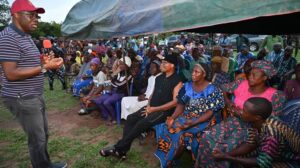
 For the children still missing, the question is immediate: when they return, what version of school will they return to?
Will they return to the same classrooms where their lives were violently interrupted, or will the experience permanently alter their relationship with education?
Teachers equally have been forced to confront a reality where commitment to their profession now comes with risk.
The Nigeria Union of Teachers (NUT) declared an industrial strike (although now called off), demanding urgent government intervention and the safe release of the victims.
However, this symbolised that education cannot continue normally when the people responsible for sustaining it feel unprotected.
But the bigger concern remains the long-term effect on learning. Every day a child stays away from school is a day lost academically.
Nigeria has spent years fighting to improve school enrolment and keep children within the education system.
But if schools become associated with danger, the country risks losing not only students but an entire generation’s confidence in the promise of education.